React Templates - Next.js
158 templates • 128 contributors • Open source & free
Available Templates (158)
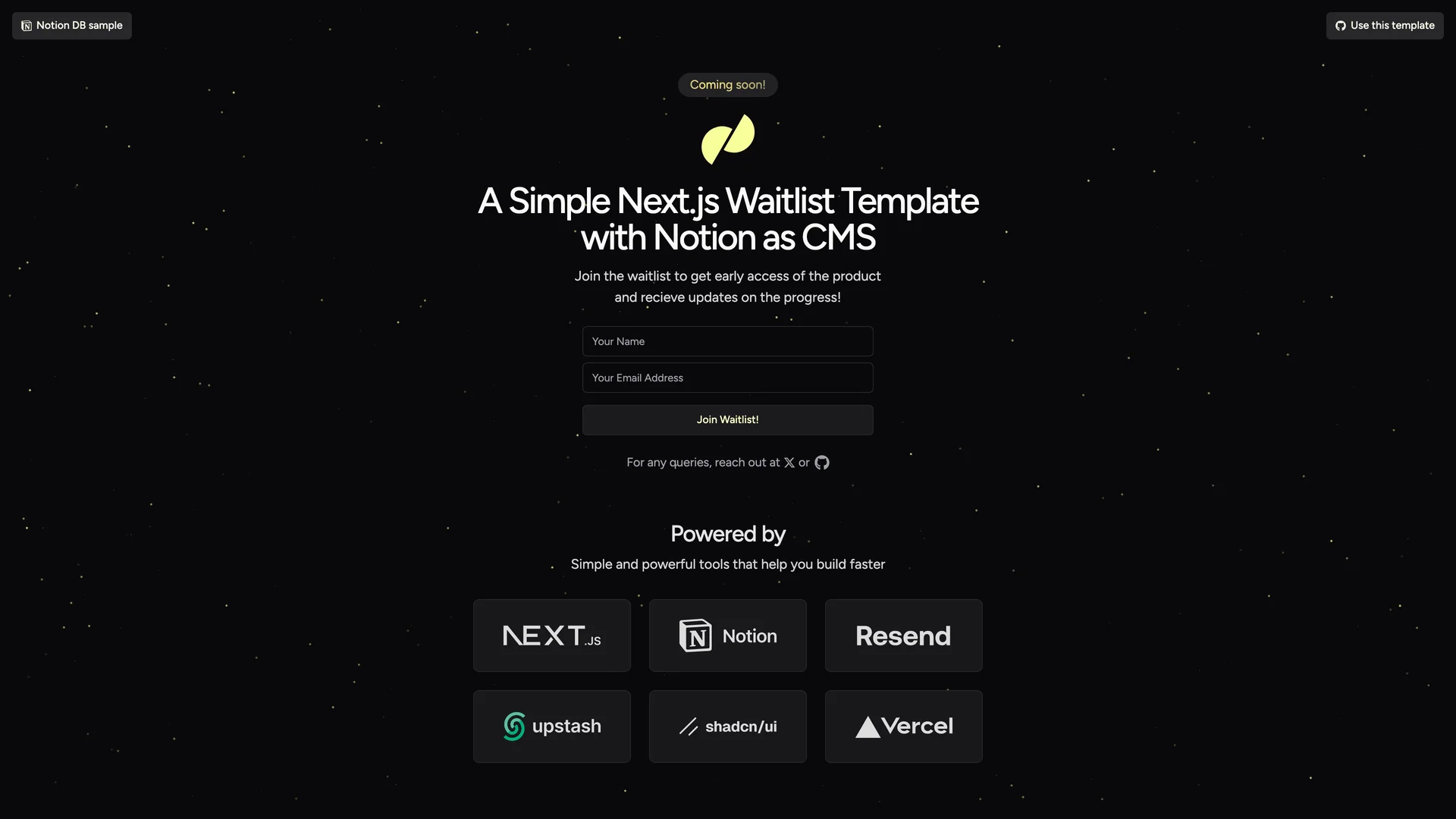
- Next.js Notion Waitlist TemplateThe Next.js Notion Waitlist Template is an elegant, production-ready solution for building and managing product waitlists using Next.js 14, Notion as a headless CMS, and modern web technologies. Built with TypeScript, Tailwind CSS, and shadcn/ui components, this template enables founders and product teams to quickly launch beautiful waitlist pages that capture early user interest, manage signups, and send automated confirmation emails. The stack integrates Notion as a database for storing and organizing waitlist entries, Upstash Redis for rate limiting to prevent spam and abuse, Resend for transactional email delivery with custom domain support, and shadcn/ui for a polished, responsive user interface. Key features include a sleek waitlist signup form with email validation, automatic storage of submissions in a Notion database, rate limiting to protect against bot submissions, automated welcome emails sent via Resend, real-time form validation and error handling, responsive design that works on all devices, and easy customization of colors, copy, and branding. The template is perfect for launching product pre-launches and beta signups, building early user communities before a product launch, collecting interested leads for SaaS products, creating event registration and RSVP systems, and managing limited-access program applications. With minimal configuration required, teams can deploy a professional waitlist page in minutes while maintaining full control over the data in their Notion workspace.
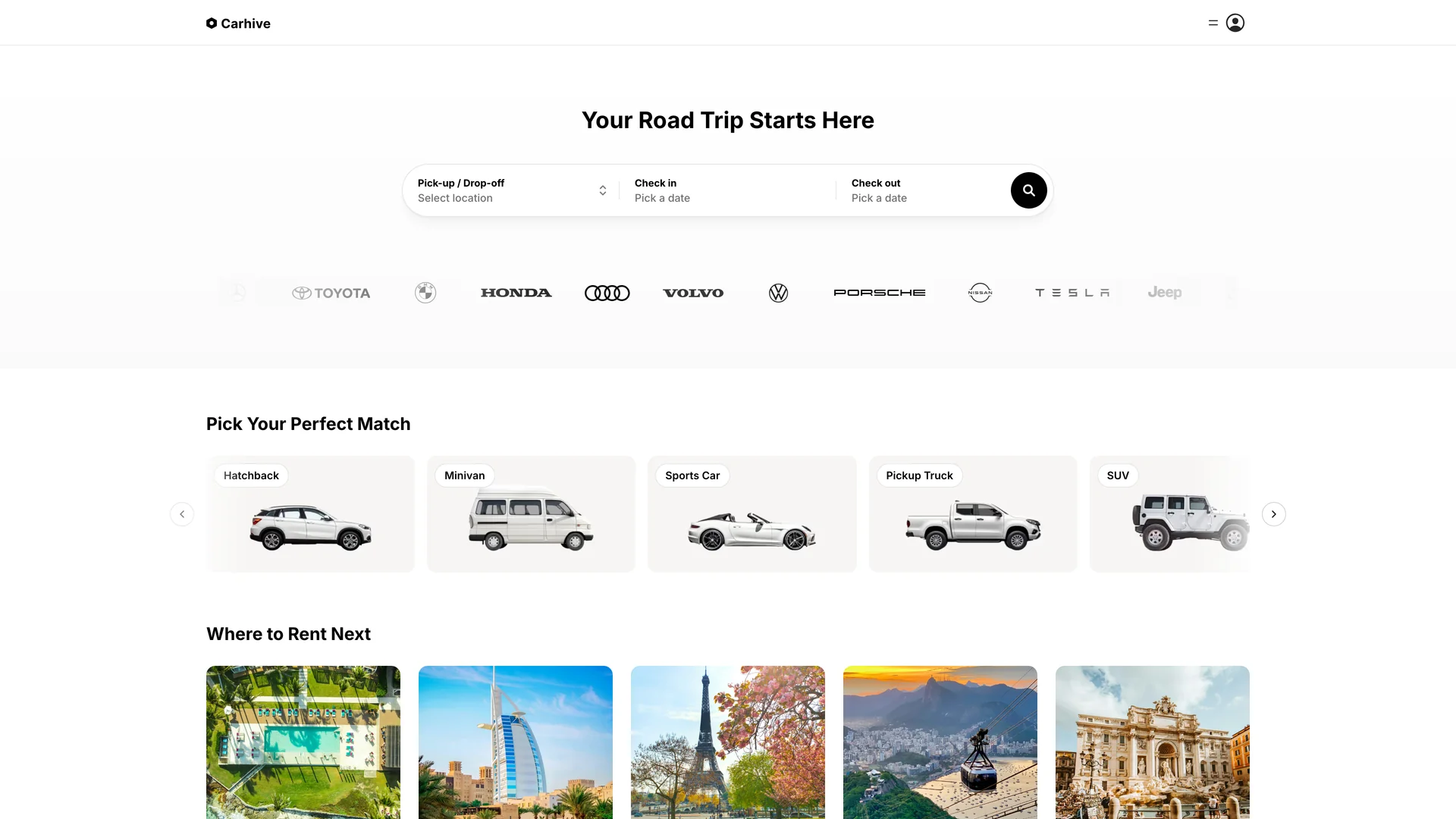
- CarhiveCarHive is a full-featured car rental marketplace application built with Next.js 14 App Router, TypeScript, and modern web technologies to demonstrate best practices for building e-commerce platforms. Powered by Clerk for authentication, Vercel Postgres for database management, Drizzle ORM for type-safe database queries, and shadcn/ui components for the interface, this project showcases how to build a production-ready rental platform with advanced features. The application includes comprehensive vehicle listings with detailed specifications and high-quality images managed through Cloudinary, advanced search and filtering by location, price, vehicle type, and availability, dynamic routing for individual car detail pages, user authentication with role-based access control via Clerk, Stripe integration for secure payment processing and booking transactions, an infinite logo slider showcasing partner brands, responsive design optimized for mobile and desktop experiences, and database schema with proper relationships between users, vehicles, and bookings. CarHive serves as an excellent reference for developers building marketplace applications where multiple vendors or inventory items need detailed presentation, e-commerce platforms requiring payment integration and booking systems, rental or reservation systems for equipment, properties, or services, and any project requiring image optimization and CDN integration with Cloudinary. The codebase demonstrates professional patterns for state management, form handling, database migrations, and API route organization in Next.js applications.
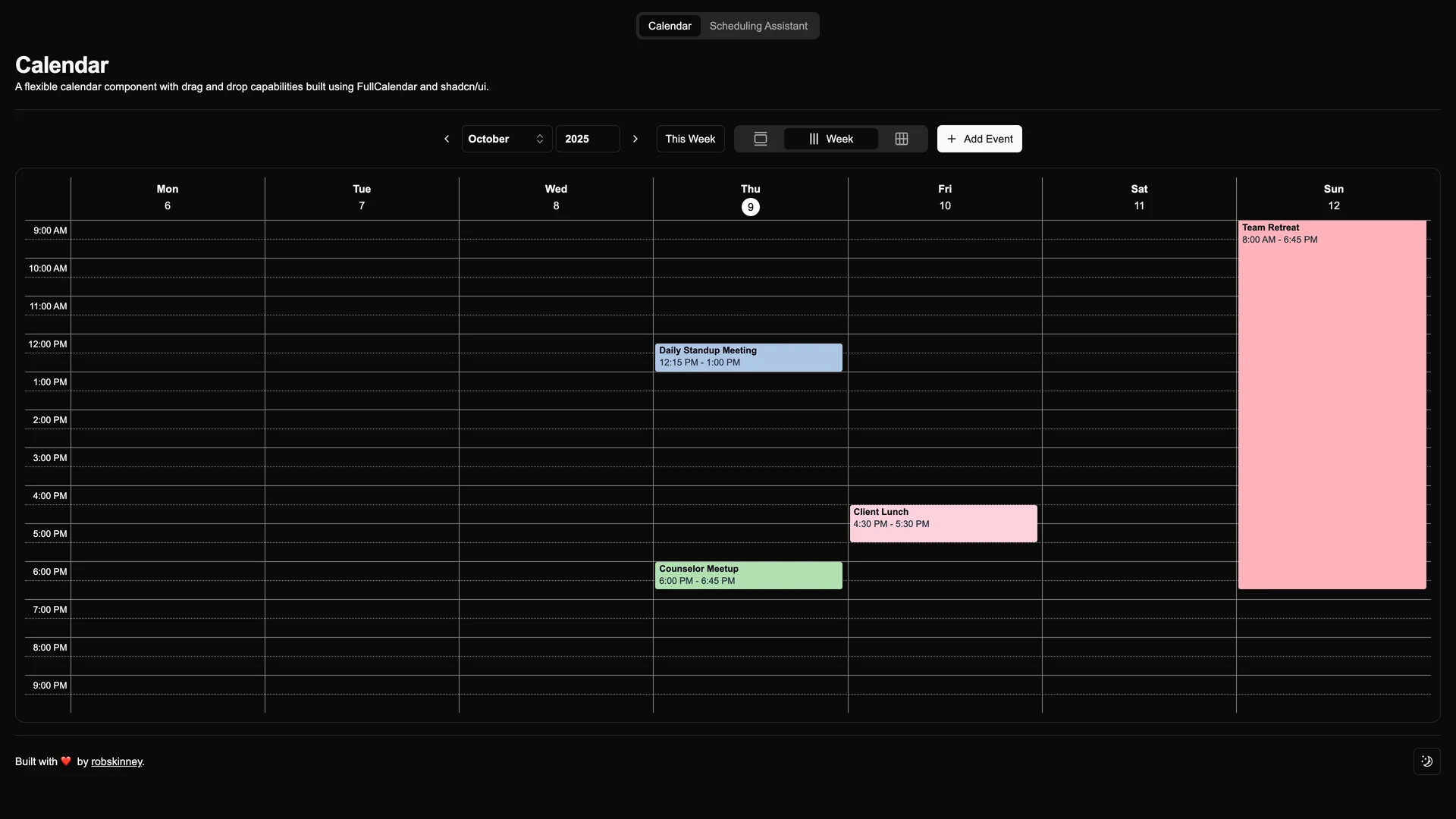
- Shadcn UI FullCalendar ExampleThe shadcn/ui FullCalendar Example is a practical demonstration of integrating FullCalendar, one of the most popular JavaScript calendar libraries, with Next.js and shadcn/ui components to create modern scheduling and event management interfaces. Built with Next.js 14, React, TypeScript, Tailwind CSS, and React Aria for accessibility, this example project shows developers how to combine FullCalendar's powerful features with shadcn/ui's beautiful component design system. The implementation includes a fully interactive calendar with month, week, and day views, event creation and editing with modal dialogs using shadcn/ui Dialog components, drag-and-drop event rescheduling directly on the calendar, event deletion and management capabilities, responsive design that adapts to mobile and desktop screens, accessible UI patterns through React Aria integration, and customizable styling that matches shadcn/ui's design language. The project demonstrates how to properly initialize FullCalendar in a Next.js environment, manage calendar state in React components, style FullCalendar to match shadcn/ui themes, and handle event CRUD operations with TypeScript type safety. This template is ideal for building appointment scheduling systems for healthcare or service businesses, team calendar applications for project management, event management platforms for conferences or meetups, booking systems for resources or meeting rooms, and any application requiring rich calendar functionality with a modern UI. The example serves as a solid foundation for developers who want to quickly add calendar features to their Next.js applications without starting from scratch.
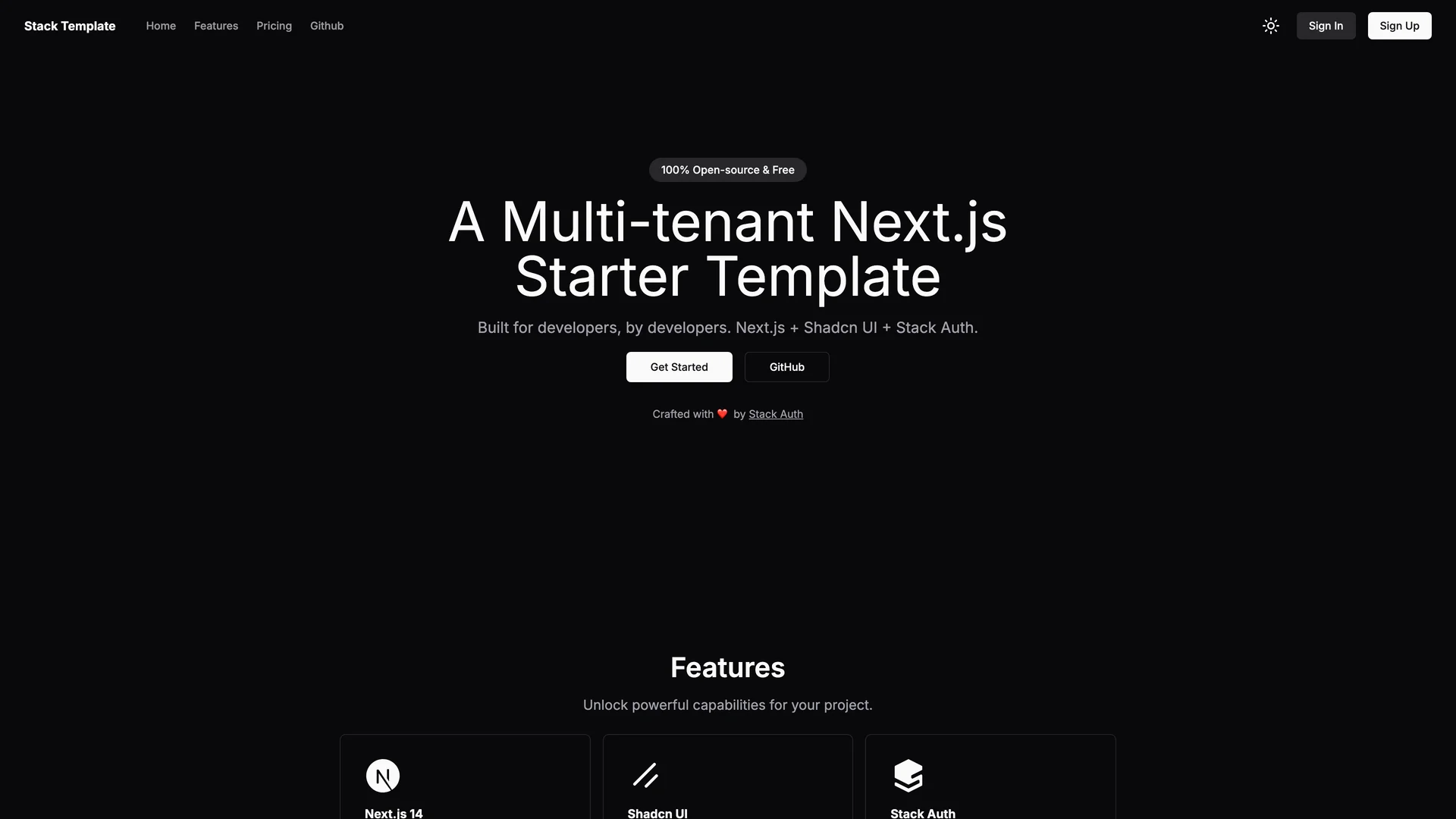
- Stack Auth Multi Tenant Starter TemplateThe Stack Auth Multi-Tenant Starter Template is a minimalistic yet powerful foundation for building B2B SaaS applications with multi-tenancy architecture using Next.js 14 and Stack Auth. Built with React, TypeScript, Tailwind CSS, and shadcn/ui components, this template demonstrates how to implement organization-based multi-tenancy where users can belong to multiple teams or workspaces, similar to platforms like Slack, Notion, or GitHub. Stack Auth provides the authentication infrastructure with built-in support for user management, team/organization creation and switching, role-based access control (RBAC) within organizations, invitation systems for adding team members, and OAuth providers for social login. The template includes pre-configured authentication flows with organization context, team switching functionality in the UI, protected routes with organization-level permissions, user profile and settings pages, team management dashboards for admins, and responsive layouts using shadcn/ui components. Developers can quickly build collaborative SaaS platforms where users work in teams, B2B applications requiring workspace isolation and permissions, project management tools with organization hierarchies, customer portal applications with multi-account access, and any application where users need to switch between different organizational contexts. The minimalistic design focuses on essential multi-tenancy patterns without overwhelming complexity, making it easy to understand the architecture and extend with custom features. Stack Auth handles the complex authentication and authorization logic, allowing developers to focus on building unique product features rather than reinventing authentication systems.
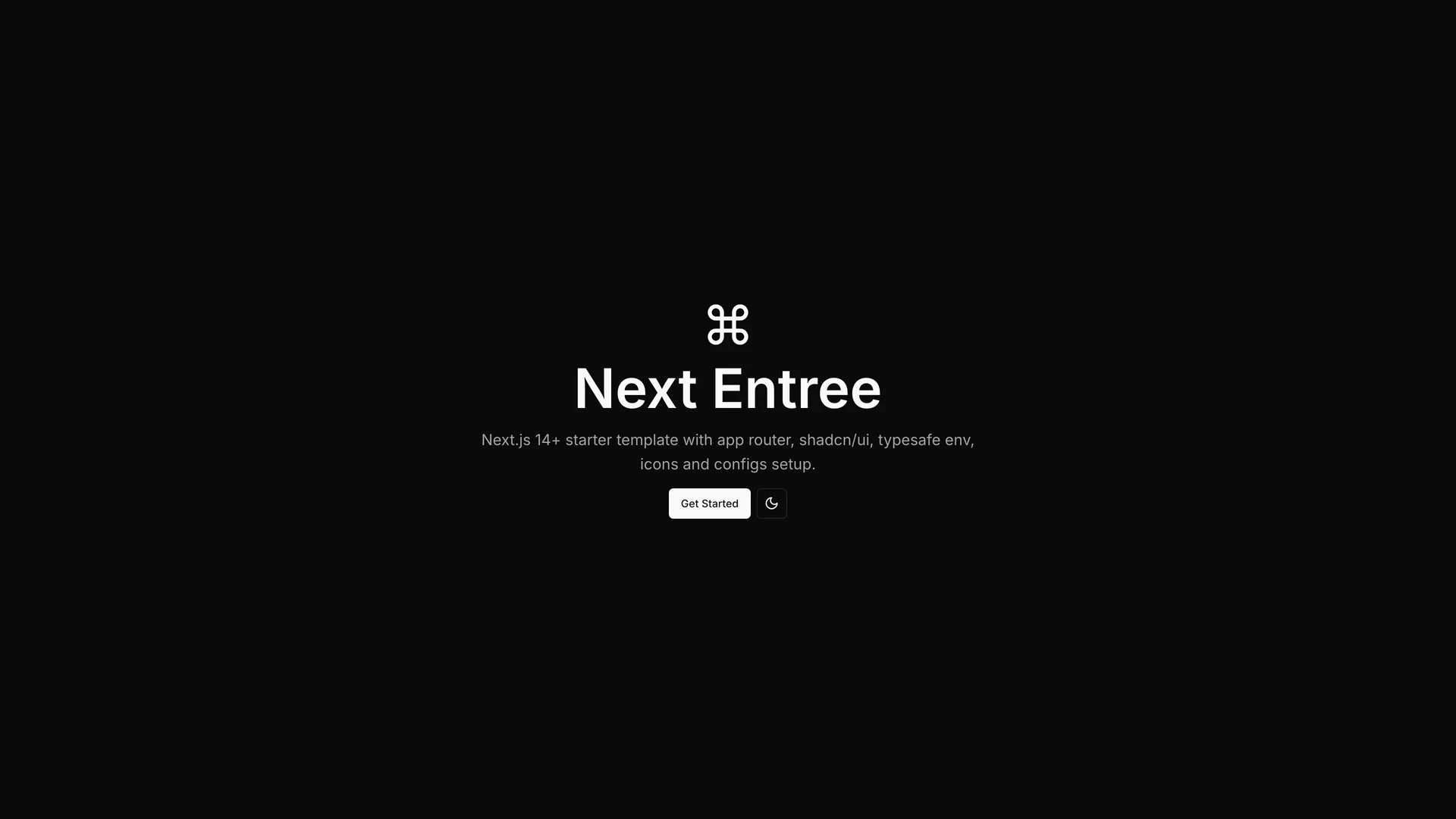
- Next EntreeNext Entree is a thoughtfully configured Next.js 14+ starter template designed to help developers start new projects with best practices and essential tooling already in place. Built with the App Router architecture, TypeScript, Tailwind CSS, and shadcn/ui components, this template eliminates the repetitive setup process that developers face when starting fresh Next.js projects. The starter includes type-safe environment variable management with validation using @t3-oss/env-nextjs to catch configuration errors at build time, pre-configured icon libraries (Lucide, Radix Icons) ready to use, ESLint and Prettier configured for consistent code style, absolute imports with path aliases for cleaner import statements, recommended VS Code settings and extensions, optimized Tailwind CSS configuration, and basic shadcn/ui components already installed. The template emphasizes developer experience with sensible defaults that can be easily customized, reducing the time from 'create next app' to writing actual application code from hours to minutes. Next Entree is perfect for developers starting new side projects or MVPs who want to skip boilerplate setup, teams establishing consistent project structures across multiple applications, hackathon participants who need to move fast with reliable foundations, agencies building multiple client projects with similar technical stacks, and anyone learning Next.js 14+ who wants to understand proper project configuration. By handling the tedious configuration decisions upfront, Next Entree allows developers to focus immediately on building features rather than debugging ESLint conflicts or setting up environment variables.
- Shadcn Datetime PickerThe shadcn Datetime Picker is a fully-featured, production-ready date and time selection component built with shadcn/ui design principles, addressing the common challenge of handling datetime input with timezone awareness in React applications. Built with Next.js, React, TypeScript, Tailwind CSS, and date-fns for date manipulation, this component extends shadcn/ui's design system with comprehensive datetime functionality including timezone support, date range constraints, and time selection. The component features timezone selection and conversion for global applications, minimum and maximum date constraints to restrict valid date ranges, combined date and time picking in a unified interface, keyboard navigation and accessibility support, customizable date formats and display preferences, integration with popular form libraries like React Hook Form, and responsive design that works seamlessly on mobile and desktop. Unlike basic date pickers, this component handles the complexity of timezone-aware datetime selection, which is critical for scheduling applications, booking systems, and any global application where users across different timezones need to coordinate times accurately. Use cases include appointment scheduling systems for healthcare, consulting, or services, event registration platforms with timezone-aware start times, booking interfaces for hotels, flights, or rentals with date constraints, content management systems with publish/expire datetime fields, and any form requiring accurate datetime input with timezone context. The component eliminates common datetime pitfalls like timezone conversion errors, invalid date selections, and inconsistent time handling across different user locales, providing a robust solution that developers can drop into their shadcn/ui projects.
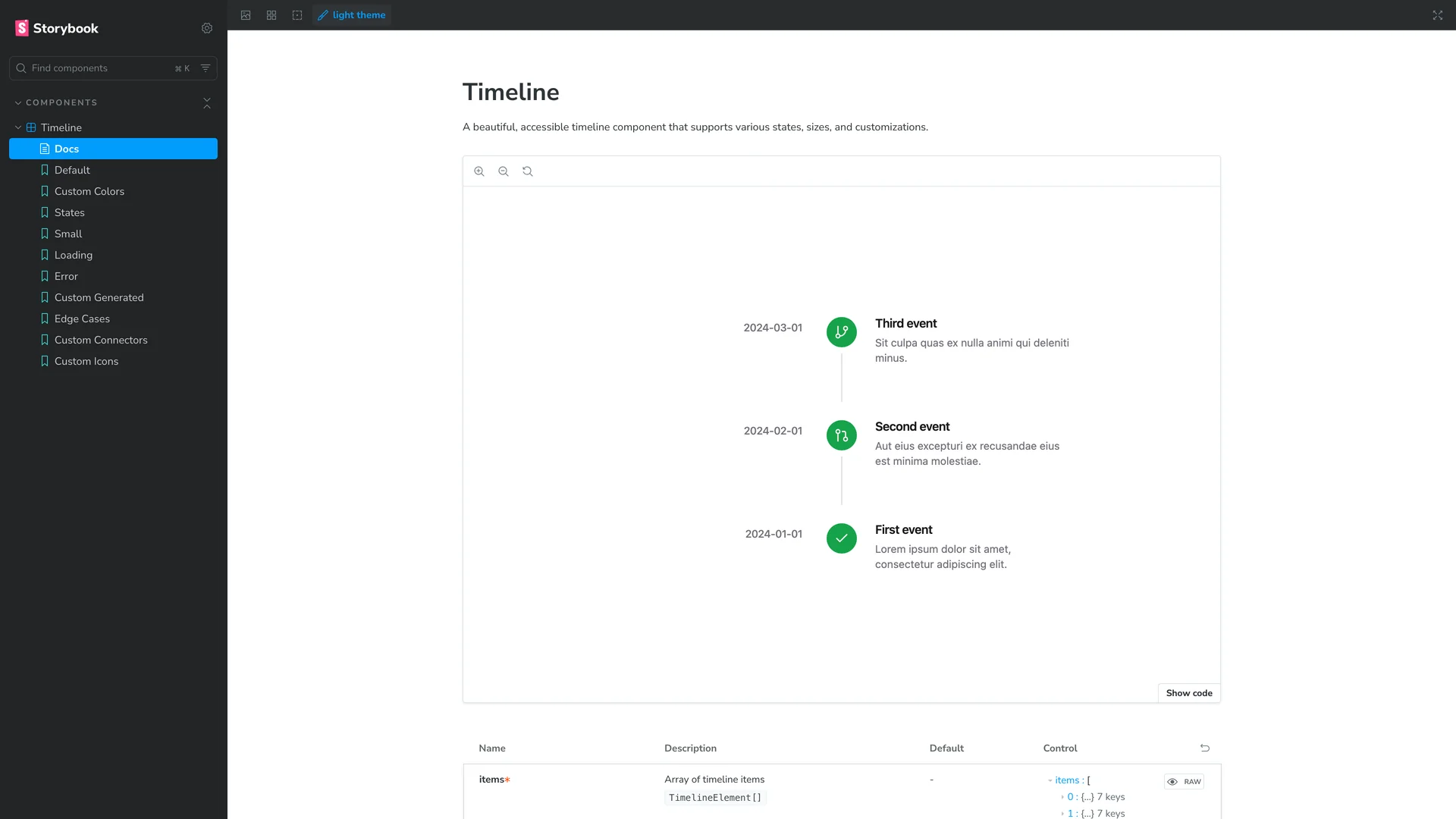
- Shadcn TimelineThe shadcn Timeline is a fully accessible, customizable, and reusable React timeline component built on top of shadcn/ui, perfect for displaying chronological events, project milestones, order tracking, or any sequential information in an elegant vertical format. Built with React, Next.js, TypeScript, Tailwind CSS, and Framer Motion for smooth animations, this component follows shadcn/ui's copy-and-paste philosophy, allowing developers to integrate it directly into their projects with full customization control rather than installing it as a locked dependency. The component features comprehensive ARIA attributes for screen reader accessibility, responsive design that adapts seamlessly to mobile and desktop viewports, multiple size and color variants for different use cases, smooth entrance and transition animations powered by Framer Motion, loading and error states for async data scenarios, TypeScript definitions for type safety, and SSR compatibility for Next.js applications. The timeline supports custom icons and status indicators for different event types, configurable date formatting to match your locale preferences, and flexible configuration through props and Tailwind classes. Use cases include displaying company history and milestone timelines on about pages, tracking order or delivery status in e-commerce applications, showing project progress and phase completion in dashboards, visualizing user activity feeds and notification histories, and presenting educational content or tutorial steps in sequential format. The component is documented in Storybook with live examples, making it easy to understand all configuration options and see the component in action before implementing it in your project.
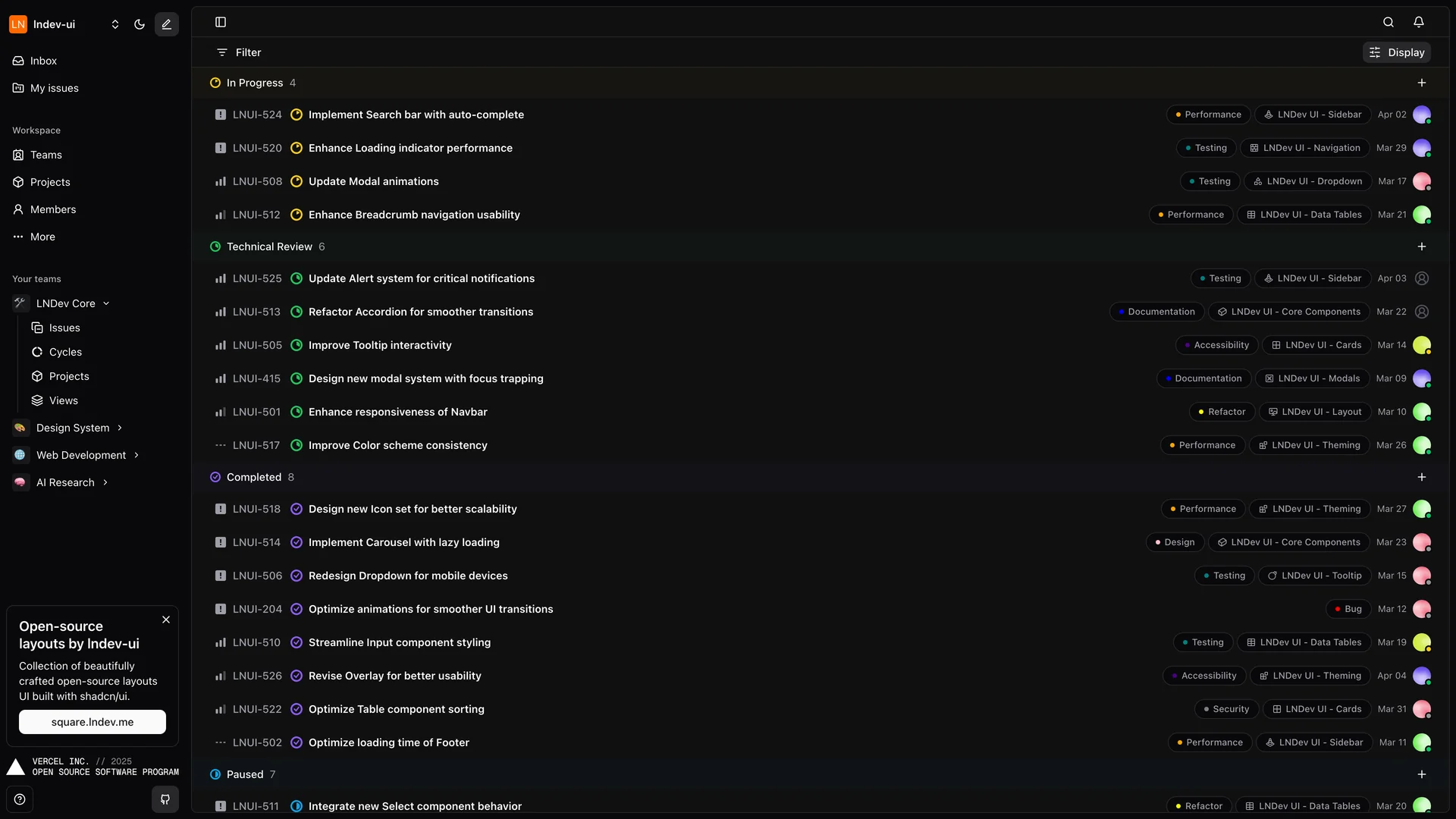
- CircleCircle is a sleek, modern project management interface directly inspired by Linear's renowned design and user experience, built with Next.js, TypeScript, shadcn/ui, and Tailwind CSS to demonstrate how to create production-quality project management tools with contemporary web technologies. With over 2,200 stars on GitHub, this open-source project showcases best practices for building responsive, performant interfaces that handle issue tracking, project organization, and team collaboration. The application features a clean, distraction-free interface optimized for keyboard navigation and rapid task management, comprehensive issue tracking with status labels, priorities, and assignments, project views with Kanban boards and list layouts, team management with member roles and permissions, responsive design that works seamlessly across desktop and mobile devices, real-time updates for collaborative team environments, and keyboard shortcuts for power users who want to move fast. Circle's design philosophy emphasizes speed and clarity, removing unnecessary visual clutter while ensuring all essential information is accessible within one or two clicks. The codebase demonstrates advanced Next.js patterns including server components, optimistic UI updates, proper TypeScript typing throughout the application, and Tailwind CSS organization for maintainable styles. This project is invaluable for developers building internal project management tools for engineering teams, learning how to replicate Linear's elegant UX patterns, creating issue tracking systems for open-source projects, studying modern Next.js architecture with shadcn/ui, and understanding how to build keyboard-first interfaces. Circle serves as both a functional project management tool and an educational resource for developers who admire Linear's approach to software design.
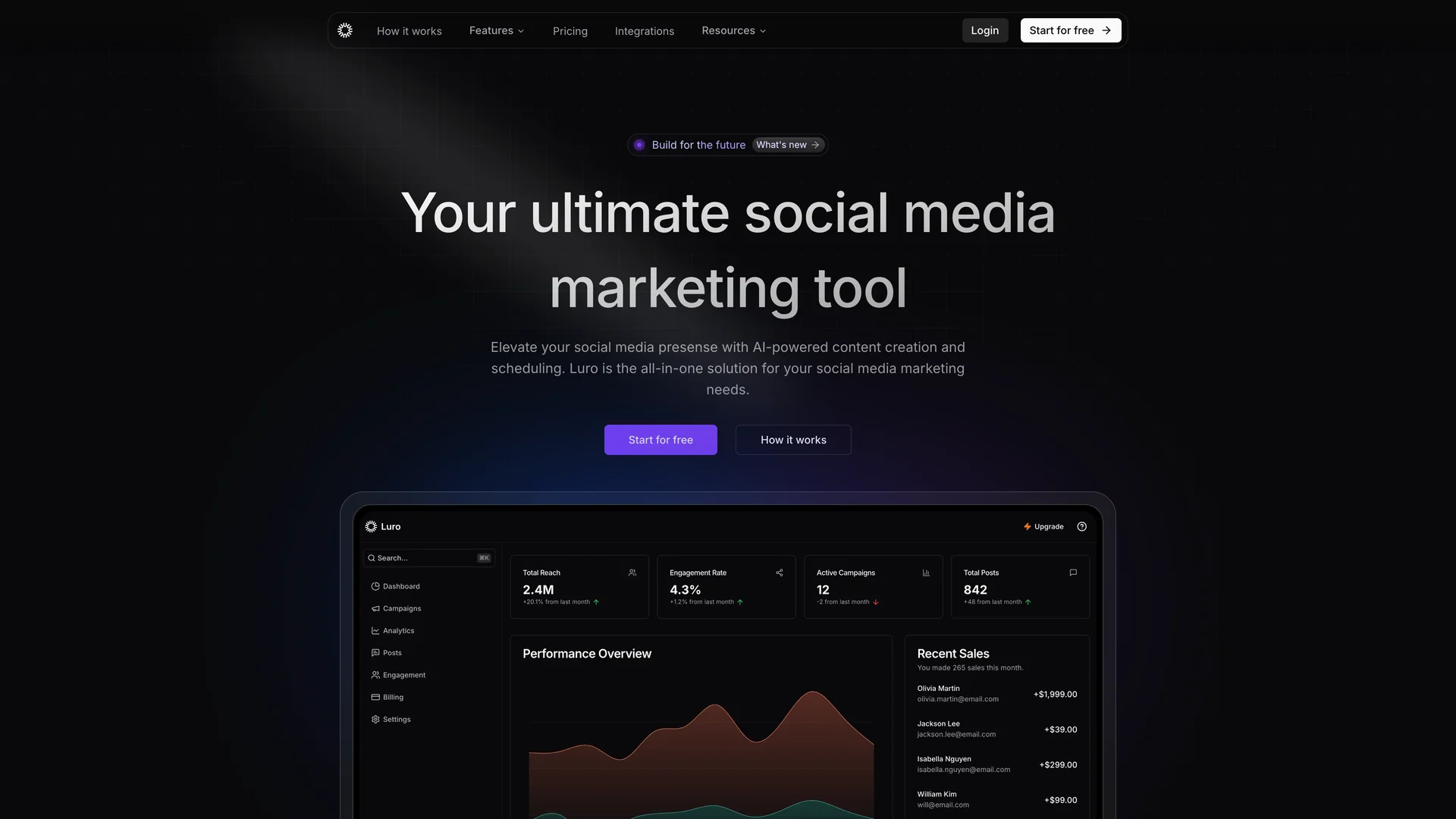
- Luro AILuro AI is a stunning, modern social media marketing platform landing page that showcases next-generation SaaS design with AI-powered features for streamlining social media management. Built with Next.js, TypeScript, Tailwind CSS, and a combination of premium UI libraries including shadcn/ui, Magic UI, and Aceternity UI, this project demonstrates how to create visually impressive marketing websites with smooth animations, interactive components, and professional design patterns. The platform features real-time social media performance tracking across multiple channels, engagement rate calculations and analytics visualization using Recharts, audience growth insights with trend analysis, custom report generation for stakeholder presentations, ROI tracking and analysis for marketing campaigns, and comprehensive data visualization capabilities powered by React charts. The tech stack includes Prisma ORM with MongoDB for flexible data modeling, Clerk authentication for user management, React Hook Form for validated input handling, and Framer Motion for fluid animations and micro-interactions that enhance user experience. The design emphasizes clean layouts with strategic use of whitespace, glassmorphism effects and modern gradient backgrounds, responsive components that adapt beautifully to all screen sizes, and accessibility-first patterns ensuring inclusive user experiences. This project is perfect for developers building SaaS marketing pages that need to impress investors and customers, learning how to combine multiple UI libraries cohesively, studying modern design trends in AI and analytics platforms, creating portfolio pieces that demonstrate frontend expertise, and understanding how to implement complex data visualizations in React. Luro AI serves as an excellent reference for contemporary SaaS landing page design, showing how to balance aesthetics with functionality.
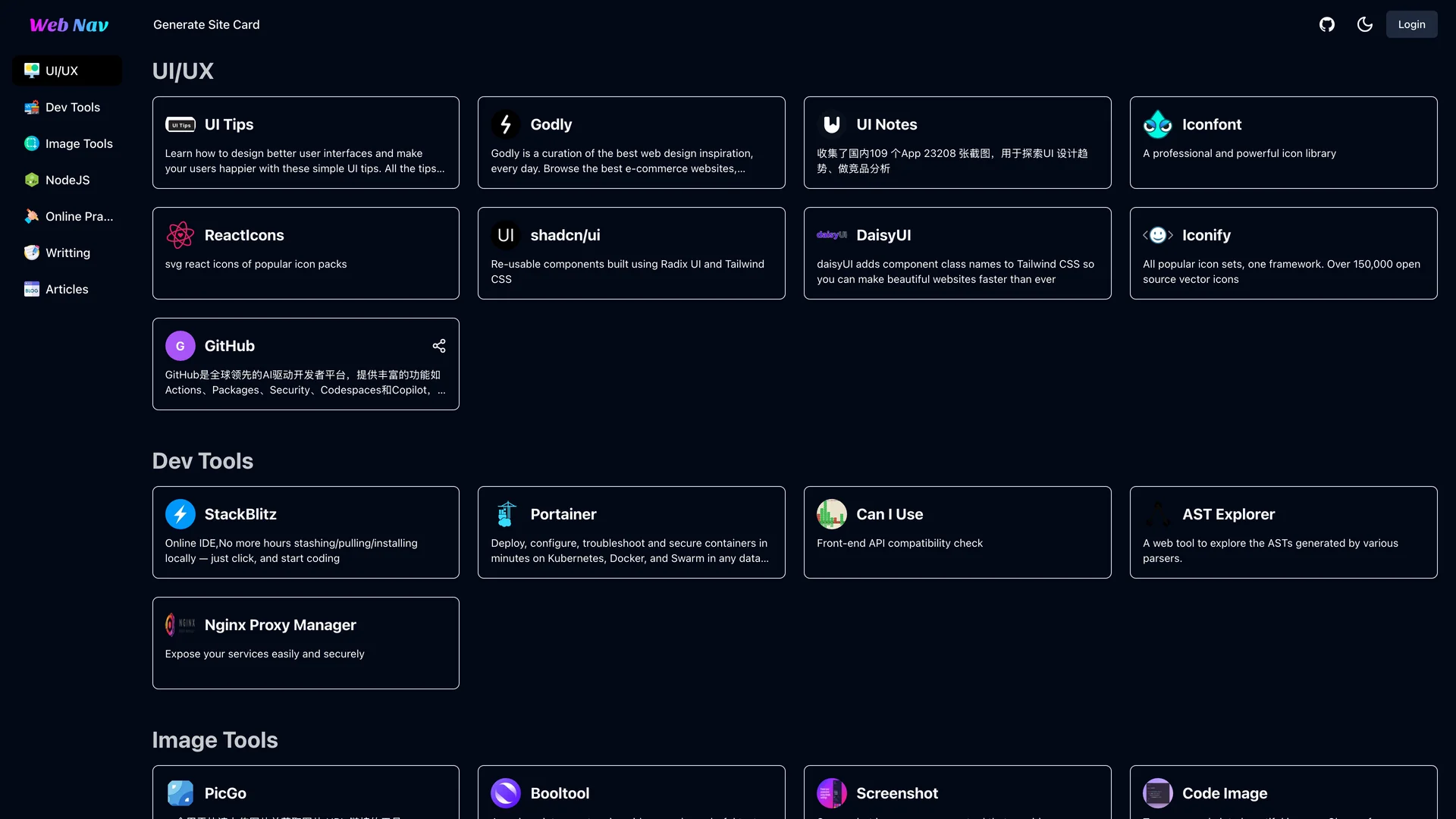
- Frontend NavFrontend Nav is a curated navigation website designed to collect, organize, and showcase high-quality frontend development resources from both domestic and international sources, making it easy for developers to discover essential tools, libraries, tutorials, and communities. Built with Next.js 13, TypeScript, Radix UI components, Tailwind CSS, NextAuth.js for authentication, Prisma ORM with MySQL on PlanetScale, and Puppeteer for automated screenshot generation, this project demonstrates modern web application development while solving a real problem: the overwhelming fragmentation of frontend resources across the internet. The platform features automated webpage information capture using Puppeteer to extract metadata, titles, and descriptions, shareable website cards with screenshots for visual recognition, user authentication allowing developers to save their personal collections, organized categorization of resources by topic, framework, or use case, dark mode support for comfortable browsing in different environments, and one-click deployment to Vercel for easy hosting. Inspired by the Taxonomy project, Frontend Nav emphasizes clean data presentation, intuitive navigation, and rapid resource discovery. The application uses MySQL hosted on PlanetScale for scalable database management, Prisma for type-safe database queries, and NextAuth.js for flexible authentication supporting multiple providers. This project is valuable for developers building resource directories or curated link collections, learning modern full-stack Next.js development patterns, studying how to implement web scraping with Puppeteer for metadata extraction, creating personal knowledge bases or bookmark managers, and understanding how to build CRUD applications with authentication and database integration. Frontend Nav serves both as a practical tool for organizing frontend resources and as an educational codebase demonstrating production-ready Next.js architecture.
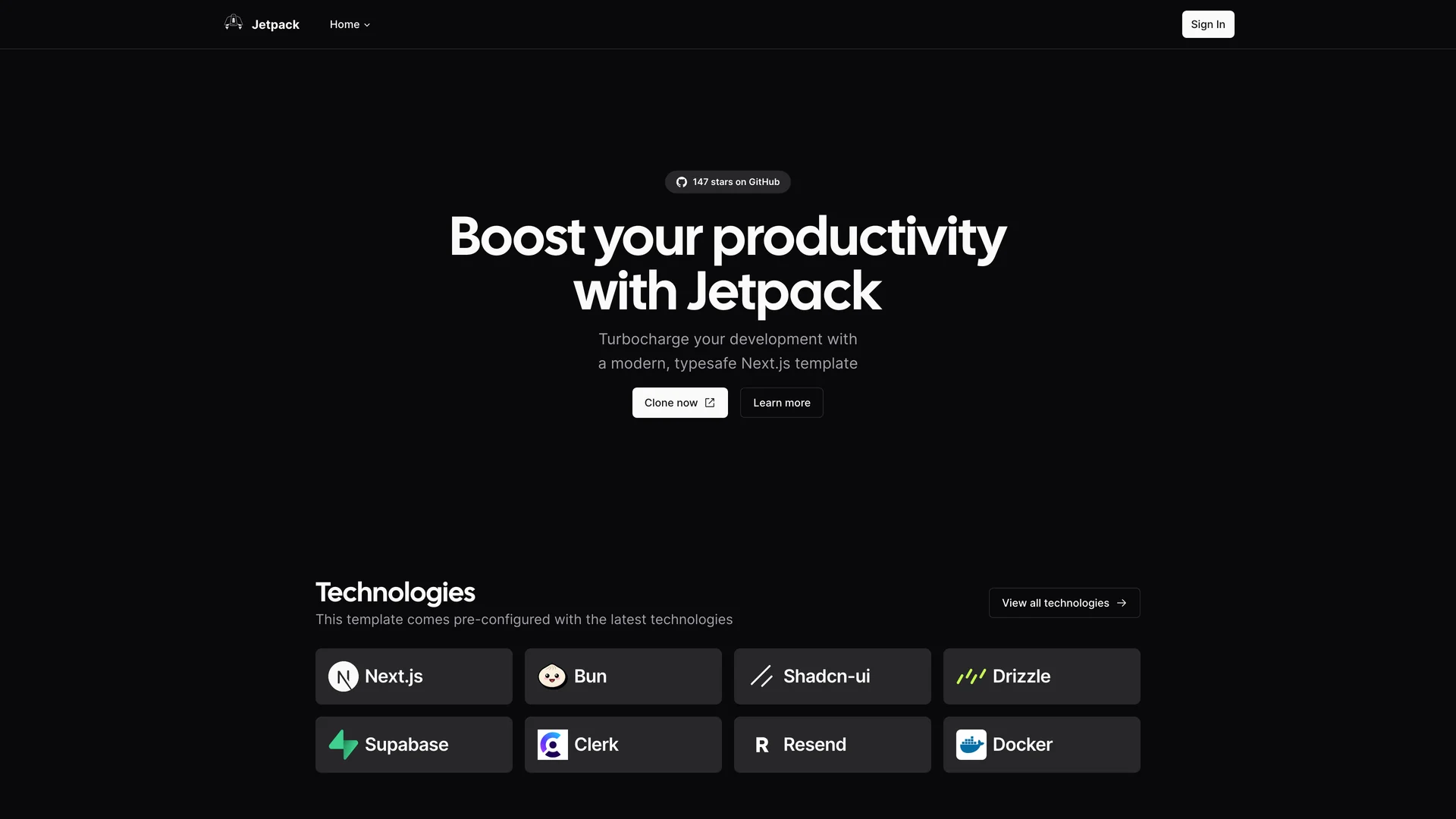
- JetpackJetpack is a comprehensive, production-ready Next.js 14 starter template that eliminates weeks of configuration by providing a fully integrated stack with Bun, shadcn/ui, TypeScript, Supabase, Drizzle ORM, Docker, Clerk authentication, and Resend email, perfect for launching modern web applications rapidly. Unlike minimal starters, Jetpack provides opinionated, battle-tested configurations that work together seamlessly, allowing developers to focus on building features rather than debugging integration issues between different technologies. The template includes Supabase for PostgreSQL database hosting with real-time capabilities, Drizzle ORM for type-safe database queries and migrations, Clerk for comprehensive user authentication and management, shadcn/ui and Tailwind CSS for beautiful, accessible components, Zod validation for runtime type checking across forms and APIs, Docker containerization for consistent development and deployment environments, GitHub Actions CI configured for automated testing and deployment, and Resend integration for transactional email delivery. The codebase demonstrates proper Next.js 14 app router patterns, environment variable management with validation, database schema design and migration workflows, and authentication flows including protected routes and user sessions. Jetpack's roadmap includes a planned "Pro" version with Stripe checkout integration, advanced user management features, admin dashboards, notification systems, and LLM integrations, showing the template's extensibility. This starter is invaluable for developers building SaaS products who want to skip months of boilerplate setup, teams establishing consistent architecture patterns across multiple projects, indie hackers launching MVPs who need to move fast with reliable foundations, and anyone learning modern full-stack development with current best practices. Jetpack represents the stack you'd build after launching several products and learning what actually matters.
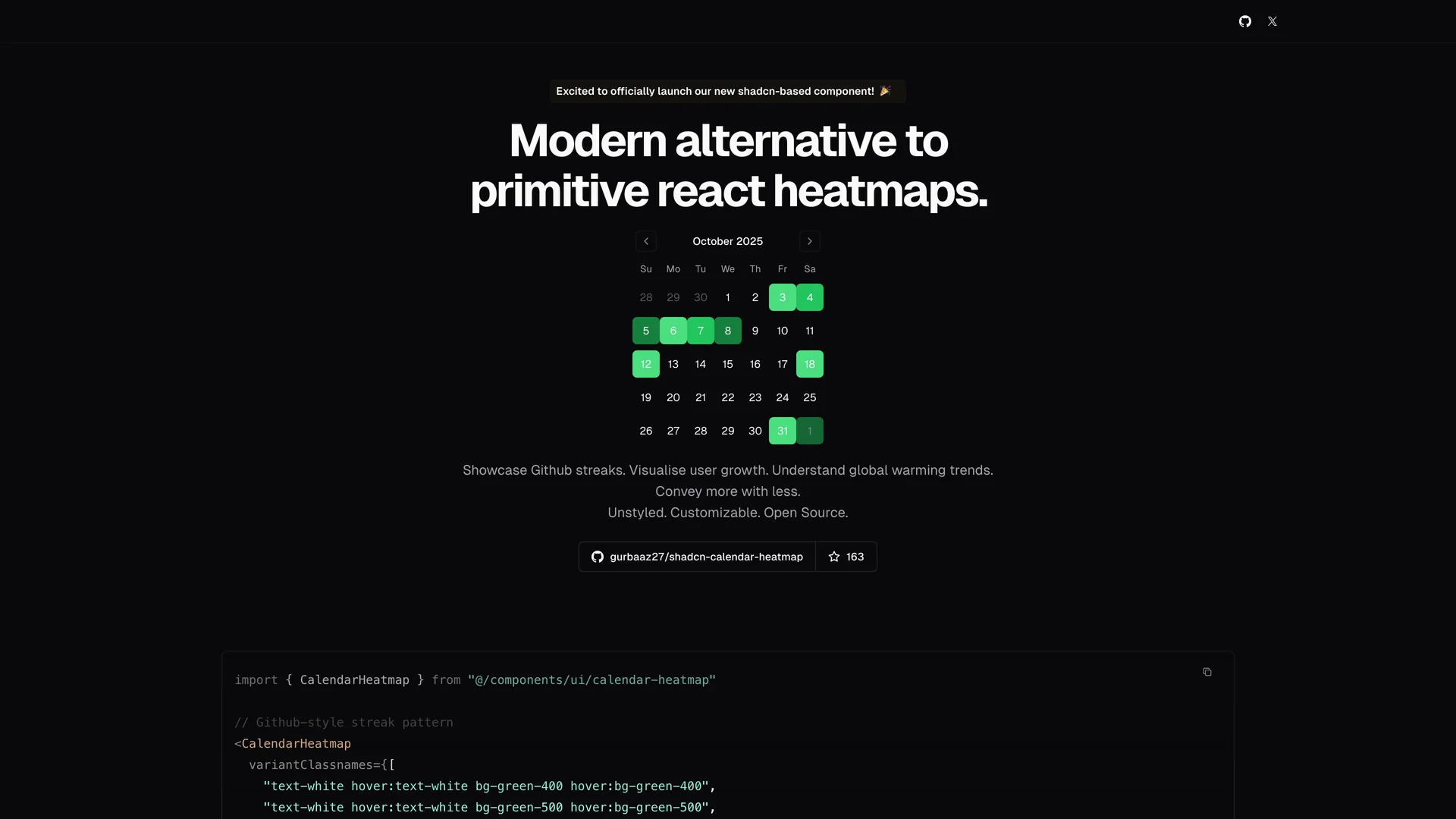
- Shadcn Calendar HeatmapThe shadcn Calendar Heatmap is a modern, sophisticated alternative to primitive React heatmap libraries, providing a GitHub-style contribution calendar visualization built with Next.js, TypeScript, shadcn/ui components, and Tailwind CSS. Designed to display temporal data patterns in an intuitive, visually appealing format, this component transforms activity data into color-coded calendar grids that make it easy to identify trends, gaps, and patterns at a glance. The heatmap features a year-view calendar layout with weekly rows showing activity intensity through color gradients, customizable color schemes to match different themes and data types, tooltip displays showing exact values and dates on hover, responsive design that adapts calendar density to screen sizes, TypeScript support ensuring type safety for data inputs, integration with shadcn/ui's theming system for consistent styling, and performance optimizations for rendering large datasets efficiently. Unlike basic heatmap solutions that offer limited customization or poor mobile experiences, this component provides the flexibility and polish expected in modern applications. Use cases include displaying user contribution history similar to GitHub's activity graph, visualizing fitness or habit tracking data across months or years, showing sales or revenue patterns to identify seasonal trends, tracking content publication frequency for blogs or social media, monitoring system uptime or error rates in DevOps dashboards, and presenting any time-series data where visual pattern recognition is valuable. The component's GitHub-inspired design is immediately familiar to developers while being flexible enough for diverse data visualization needs. Built with TypeScript throughout, it provides excellent developer experience with autocomplete and type checking, making integration smooth and reducing runtime errors.