React Templates - React
179 templates • 146 contributors • Open source & free
Available Templates (179)
- Chai BuilderChai Builder is an AI-enabled, open-source low-code visual builder for React and Tailwind CSS that allows developers and non-technical users to create web pages through intuitive drag-and-drop interactions. This innovative platform integrates seamlessly with React applications, uses Tailwind CSS for styling, supports custom block rendering, and provides a simple React component for embedding the builder directly into existing applications. The visual page building interface enables rapid web page development without extensive coding, making it possible for designers, product managers, and other team members to contribute to UI development while developers maintain control over component libraries and design systems. Perfect for agencies building client websites quickly, SaaS platforms offering customizable user-facing pages, marketing teams needing landing page flexibility without developer bottlenecks, or any project where visual development accelerates iteration cycles and enables non-technical stakeholders to participate in UI creation. As a community-driven, extensible platform with a Next.js starter project and live demo at chaibuilder-sdk.vercel.app, Chai Builder demonstrates how low-code tools can enhance rather than replace traditional development workflows, providing a bridge between visual design tools and production-ready React applications while maintaining code quality and customization capabilities.
- Blocks.soBlocks.so is an open-source library of accessible and customizable UI blocks built with React, TypeScript, Tailwind CSS, and shadcn/ui, designed for easy copy-and-paste integration into applications. This modular component system provides developers with pre-built, reusable blocks that can be added directly to projects via the shadcn CLI with commands like 'npx shadcn@latest add @blocks/login-01', streamlining the process of implementing common UI patterns. The library focuses on accessibility and customization, offering thoroughly tested components with proper semantic HTML, keyboard navigation, and screen reader support while maintaining the flexibility to adapt to specific design requirements. With live previews available at blocks.so and comprehensive TypeScript definitions (71.2% of codebase) with MDX documentation (27.2%), the project provides developers with confidence in component behavior and usage patterns. Perfect for development teams establishing consistent design systems, developers building MVPs with limited design resources, agencies delivering client projects with tight timelines, or any application where UI implementation speed and accessibility compliance are critical success factors. Released under the MIT license, Blocks.so demonstrates the power of community-driven component libraries to accelerate development without sacrificing code quality or user experience.
- Gradient PickerGradient Picker is a fancy, visually appealing web application built with Next.js, React, TypeScript, Tailwind CSS, shadcn/ui, and Radix UI, designed to help developers and designers select and customize color gradients with an intuitive interface. This comprehensive color tool enables users to select solid colors, create and customize complex gradients, browse background images, and generate complete color themes for UI components, all within a unified, accessible interface. The application provides free samples for exploration and includes an affiliate program offering significant commissions, demonstrating a sustainable open-source business model. Perfect for design systems teams establishing brand colors and gradient patterns, developers building themed applications requiring dynamic color generation, marketing teams creating branded assets and landing pages, or designers working on visual identities where gradient exploration and theme generation accelerate creative workflows. With easy integration into existing design systems and released under the MIT license, Gradient Picker showcases how specialized tools can bridge the gap between design inspiration and implementation, providing developers with a practical utility that generates production-ready CSS while offering designers the creative freedom to explore color combinations without technical barriers.
- Shadcn Address AutocompleteShadcn Address Autocomplete is an intelligent address input component built with Next.js, Tailwind CSS, shadcn/ui, Zod validation, and Google Places API integration, designed to simplify and improve the accuracy of address entry in web applications. This responsive, user-friendly component provides autocomplete suggestions as users type, leveraging Google's extensive location database to help users quickly and accurately enter complete address information without tedious manual input. The integration with shadcn/ui ensures consistent styling and accessibility standards, while Zod validation provides runtime type safety for address data. Perfect for e-commerce checkout flows, delivery service applications, real estate platforms, form builders requiring address fields, or any application where address accuracy directly impacts business operations and user satisfaction. The component handles the complexity of API integration, rate limiting, and result formatting, allowing developers to implement professional address autocomplete functionality without building from scratch. Important implementation note: the live demo uses mock data for demonstration purposes, and developers should properly configure their own Google Places API keys for production use to ensure reliable, accurate autocomplete functionality with appropriate usage limits and security measures.
- Shadcn UI CustomizerShadcn UI Customizer is an open-source web application built with Next.js, TypeScript, Tailwind CSS, and shadcn/ui, providing an intuitive visual interface with interactive color pickers for customizing shadcn/ui themes without manual CSS variable editing. This powerful tool enables developers and designers to customize comprehensive design tokens including background and foreground colors, primary, secondary, and accent colors, card, popover, and input styles, border properties, and border radius settings, all through a user-friendly web interface that provides real-time previews of changes. Inspired by the original shadcn/ui theme customizer, this enhanced version offers additional customization options and improved developer experience for teams establishing brand-specific design systems. Perfect for agencies customizing shadcn/ui for multiple clients, product teams aligning UI themes with brand guidelines, designers collaborating with developers on design system specifications, or any project where theme customization without diving into CSS files accelerates the design-to-development workflow. With deployment on Vercel and a TypeScript-heavy codebase (99%), the customizer demonstrates how visual tools can enhance the shadcn/ui ecosystem, making theme customization accessible to team members who may not be comfortable editing raw CSS variables while maintaining the flexibility and control that developers expect.
- CSV ImporterCSV Importer is a comprehensive data import application built with Next.js, Tailwind CSS, shadcn/ui, react-dropzone, uploadthing, and Papaparse, designed to simplify the entire workflow of uploading, parsing, and importing CSV files into applications. This streamlined tool provides five key capabilities: intuitive CSV file upload with drag-and-drop functionality, robust CSV parsing handling various formats and encodings, data preview allowing users to verify content before import, flexible CSV field mapping to table fields for schema alignment, and reliable data import into tables with validation and error handling. Bootstrapped with create-t3-app and following modern web development best practices, the application addresses the common challenge of data migration and bulk import features that nearly every business application eventually requires. Perfect for SaaS applications offering data import functionality, admin panels managing bulk data operations, migration tools helping users switch from competitor products, or any application where CSV import is a critical user workflow that directly impacts adoption and user satisfaction. The combination of react-dropzone for file handling, Papaparse for parsing, and uploadthing for storage provides a production-ready solution that handles edge cases and provides users with confidence during data import operations.
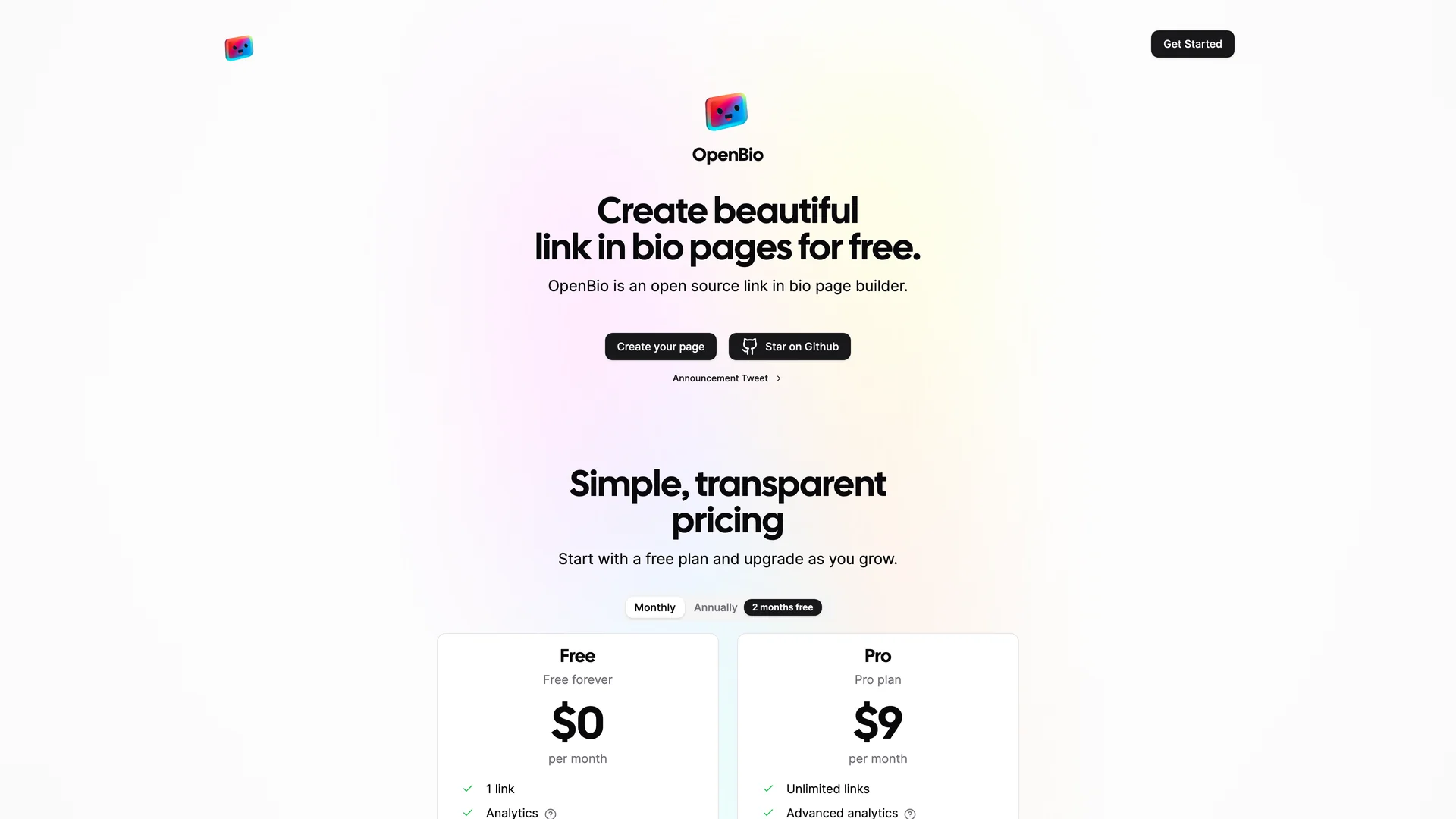
- LinkNodeLinkNode is an open-source link-in-bio tool built with Next.js, TypeScript, Tailwind CSS, and shadcn/ui, designed to help users generate one centralized link for all their online destinations with unlimited link capacity and customization options. This comprehensive platform enables users to add unlimited links to their profile page, customize social media and other link icons for brand consistency, provide live preview functionality to see changes in real-time, and leverage integrated URL shortening with Dub.co including support for custom domains and link cloaking for professional branding. Hosted on Vercel and emphasizing simplicity without sacrificing features, LinkNode addresses the growing need for content creators, businesses, and individuals to consolidate their online presence into a single, shareable destination. Perfect for social media influencers managing multiple platforms, businesses directing customers to various resources, event organizers sharing registration and information links, or anyone seeking to replace limited or expensive link-in-bio services with a self-hosted, fully customizable solution. The integration with Dub.co's URL shortening service adds professional link management capabilities, enabling users to track clicks, use branded short links, and maintain clean, memorable URLs while the live preview feature ensures perfect presentation before sharing with audiences.
- AI LLM ComparisonAI LLM Comparison is a comprehensive, open-source web application built with Next.js 14, TypeScript, Tailwind CSS, Radix UI, and integrated with Vercel Analytics and PostHog, designed to help users compare AI language models across different providers in one centralized platform. This invaluable resource provides price comparison across major AI providers (OpenAI, Anthropic, Google, Meta, Cohere), an interactive pricing calculator for cost estimation, side-by-side model comparisons highlighting capabilities and limitations, real-time data updates sourced from BerriAI's LiteLLM for accuracy, responsive design for all devices, and completely free access without registration requirements. The platform addresses the growing challenge of AI model selection as the LLM landscape becomes increasingly complex with diverse pricing models, capability differences, and provider-specific features. Perfect for developers choosing models for production applications, businesses evaluating AI implementation costs, researchers comparing model capabilities for academic work, or students learning about LLM options and pricing structures. By aggregating accurate, up-to-date information from trusted sources and presenting it through an intuitive comparison interface, this tool eliminates the time-consuming process of visiting multiple provider websites and reconciling different pricing structures, enabling informed decisions about AI model selection based on transparent data rather than marketing materials.
- Next Prisma Tailwind EcommerceNext Prisma Tailwind Ecommerce is an open-source, full-stack e-commerce platform built with TypeScript, Next.js 14 App Router with React Server Components, Prisma ORM, Tailwind CSS, Radix UI, shadcn/ui, and Zod validation, providing both a customer-facing storefront and a comprehensive admin panel for complete store management. This enterprise-grade solution features custom dynamic sitemap generation for SEO, admin dashboard for managing products, orders, and payments, file uploads with next-cloudinary integration, JWT authentication with httpOnly cookies for security, storefront with integrated blog powered by MDX, email verification and invoice generation, metadata handling for SEO optimization, and internationalization support for global markets. The monorepo architecture separates the admin and storefront applications, allowing independent scaling and deployment to Vercel, Netlify, or Docker environments. Perfect for businesses launching online stores with full control over the stack, developers building custom e-commerce solutions for clients, startups requiring rapid deployment without merchant lock-in, or any project where combining content marketing (blog) with product sales creates competitive advantages. The separation of admin and storefront concerns enables teams to work independently on customer experience and operational tools, while the MDX-powered blog system allows non-technical team members to create SEO-optimized content that drives organic traffic and customer engagement.
- Expo DOM Components ExampleExpo DOM Components Example is a comprehensive demonstration project built with TypeScript, Expo, React, Tailwind CSS, and MDX, showcasing how to use DOM components in Expo applications with integrations from shadcn/ui, React Three Fiber, emoji-mart, and react-mobile-cropper. This practical reference implementation demonstrates cross-platform development techniques by combining web and mobile technologies in a unified codebase that runs on web browsers and iOS devices (via TestFlight). The project includes examples of UI component integration from shadcn, MDX content support for rich documentation, React Three Fiber demos for 3D graphics, image cropper functionality for media manipulation, and emoji picker integration for user-generated content. Perfect for developers building cross-platform applications with Expo, teams evaluating Expo's web capabilities for progressive web apps, mobile developers transitioning to web development with familiar tools, or any project where code sharing between web and mobile platforms reduces development costs and maintenance overhead. Created by Evan Bacon, this example serves as an authoritative reference for implementing DOM components in Expo environments, demonstrating how modern React patterns, web libraries, and mobile frameworks can coexist in a single application architecture while maintaining native-quality user experiences across platforms.
- Instagram Video DownloaderInstagram Video Downloader is an educational web application built with Next.js 15+, TypeScript, shadcn/ui, Tailwind CSS v4, React Hook Form, Zod validation, TanStack Query, next-themes, and next-intl, designed to demonstrate modern web development techniques through a practical Instagram video downloading interface. This comprehensive learning project showcases Next.js App Router implementation, responsive and clean UI development with shadcn/ui components, form handling with React Hook Form and Zod validation, client-side caching with TanStack Query for performance optimization, light/dark mode theming for user preference, and internationalization support for global accessibility. Built primarily as an educational demonstration, the project provides hands-on learning opportunities for developers studying Next.js fundamentals, UI component development, state management, form handling, API integration, modern styling techniques, and TypeScript implementation in production-like scenarios. Perfect for developers learning modern web development stacks, coding bootcamp instructors seeking real-world project examples, students building portfolios with contemporary technologies, or anyone exploring how different libraries and frameworks integrate in Next.js applications. The project emphasizes responsible use and learning while acknowledging potential Terms of Service considerations, making it valuable as a technical reference for understanding how complex user interactions, external APIs, and modern React patterns work together in production web applications.
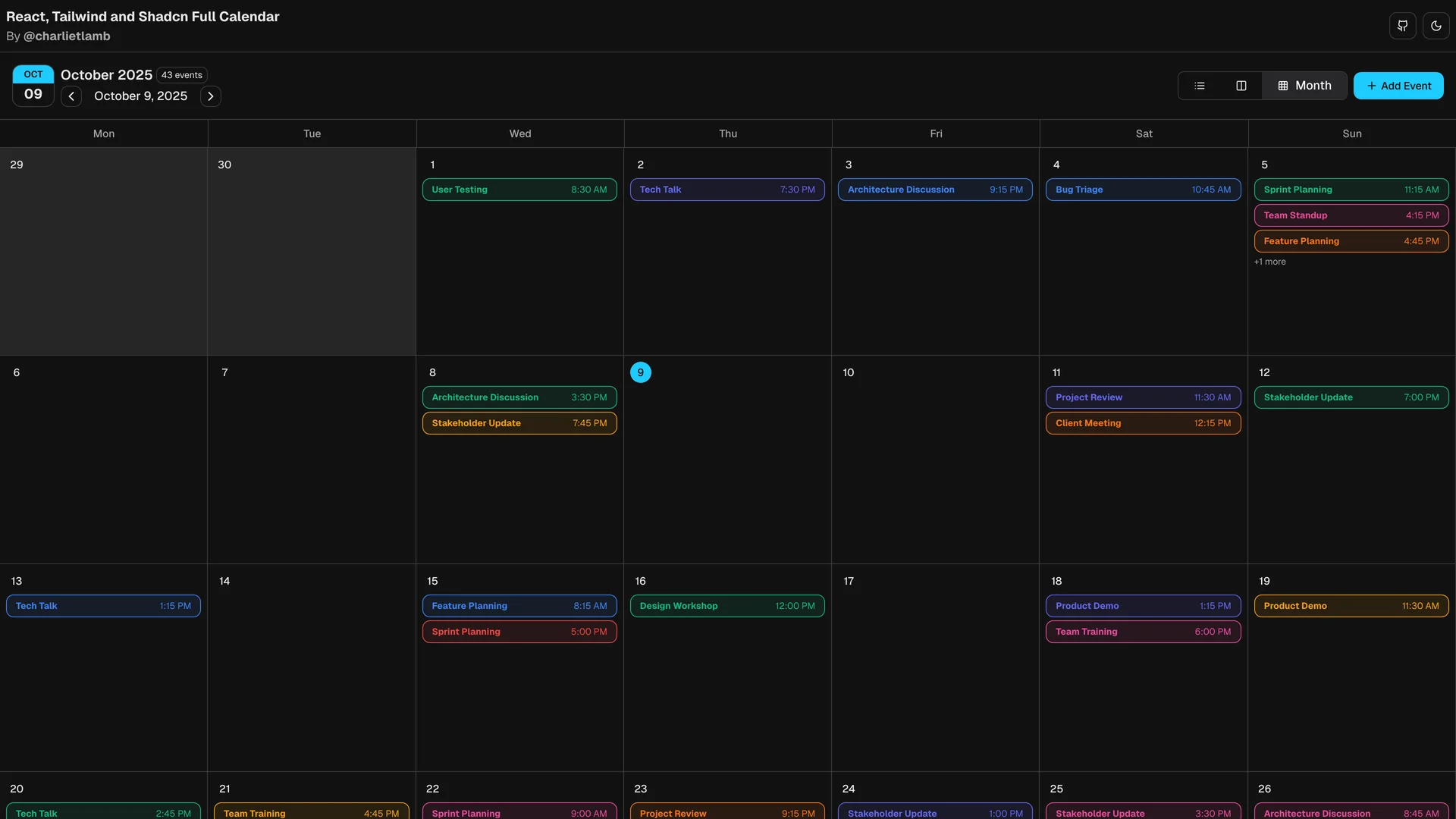
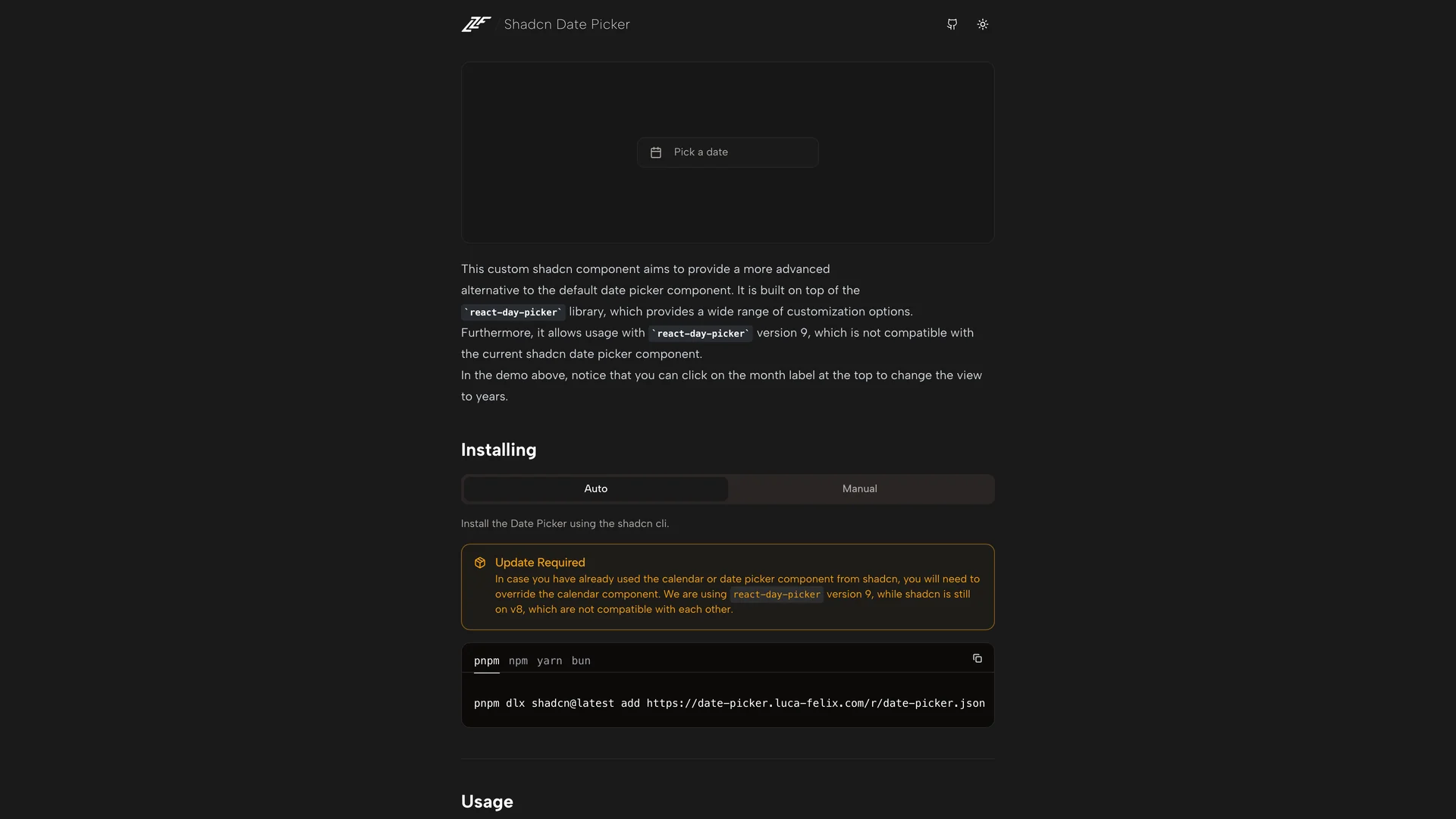
- Shadcn Calendar ComponentShadcn Calendar Component is a flexible, feature-rich date picker built with Next.js, React, TypeScript, shadcn/ui, date-fns, date-fns-tz, and Tailwind CSS, designed to provide advanced date selection capabilities with single and multi-month views, predefined date range options, and timezone-aware date handling. This sophisticated component supports selecting predefined ranges like "Today", "This Week", "This Year" for quick date selection, interactive date picking with both mouse and keyboard controls for accessibility, customizable year and month range selection for historical or future dates, and timezone-aware date handling ensuring accurate date representation across global deployments. The clean, modern UI design integrates seamlessly with shadcn/ui design systems while the date-fns library provides robust date manipulation without the overhead of larger date libraries. Perfect for analytics dashboards requiring date range filters, booking systems handling reservations across timezones, reporting tools with flexible date selection requirements, or any application where sophisticated date picking directly impacts user workflows and data accuracy. The component's support for predefined ranges accelerates common user interactions like viewing "Last 7 Days" or "This Month" data without manual date selection, while timezone awareness prevents the common pitfalls of date handling in globally distributed applications where server and client timezones differ.