shadcn.io is an independent project built on shadcn/ui
Fireflies Background for Svelte
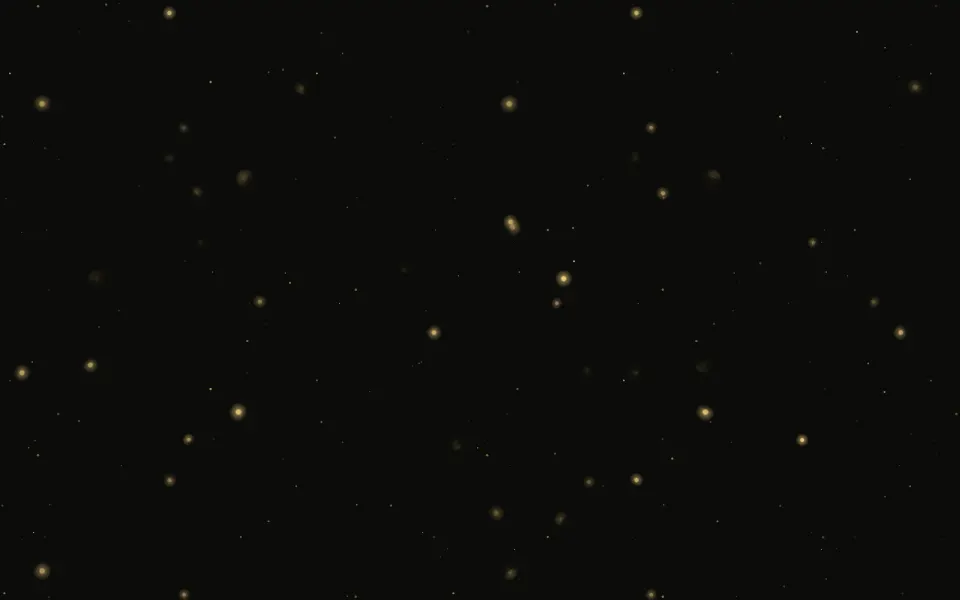
Warm dots wander on curved paths and pulse, each with a soft halo. For Svelte with Ark UI, when a hero needs quiet life behind its copy.
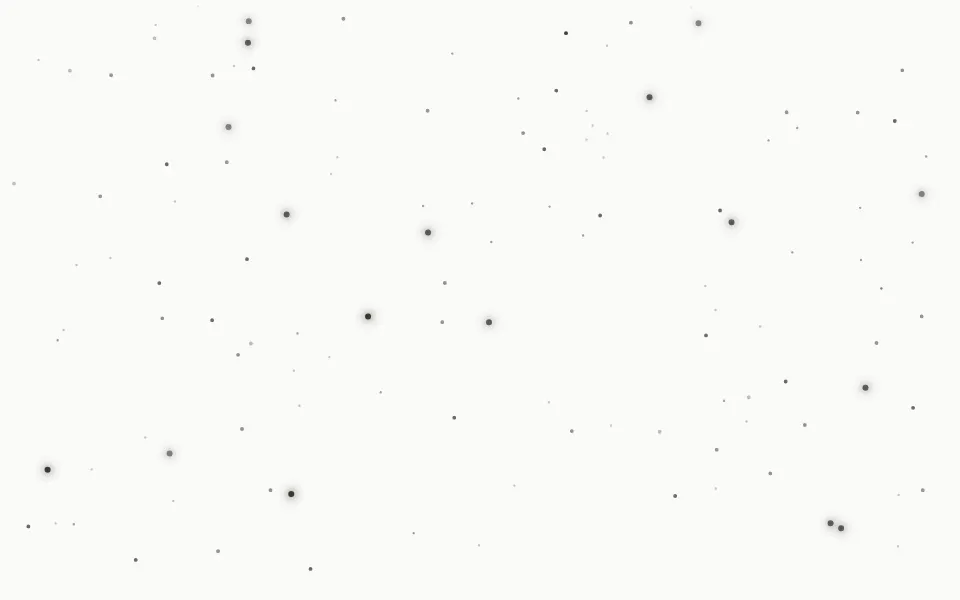
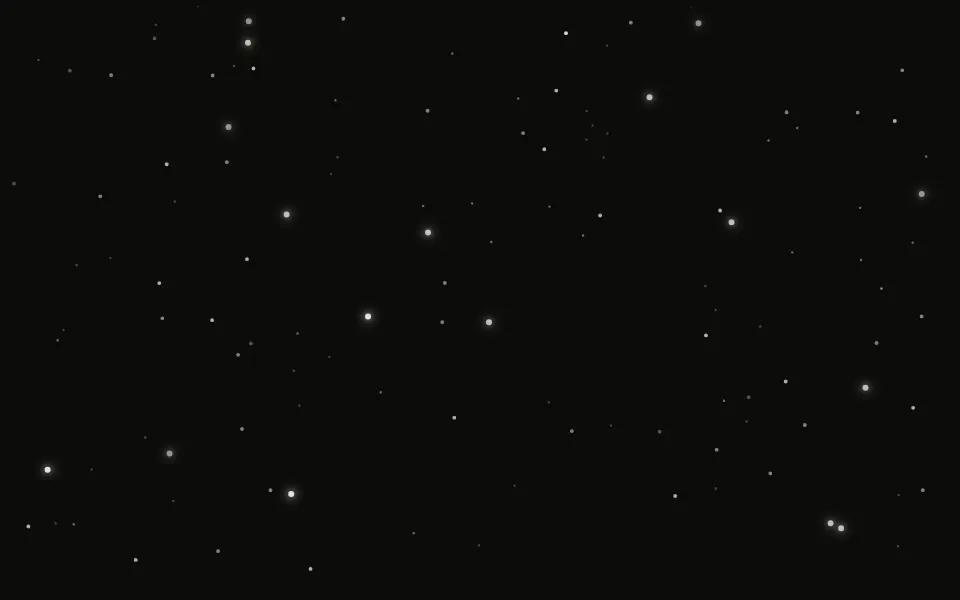
Warm dots wander on curved paths, each with a soft halo and a short streak of light behind it, lighting up and going dark on its own rhythm. They sit at three depths over a faint mist along the bottom. It's a GLSL scene on WebGL2 with no dependency. On a dark surface they're light with a white-hot dot; on a light one, dots of pigment in a deeper tone with a tinted halo. They gather loosely around the pointer, and the ones near it wake up.
Use it behind a hero or a section that should feel like a summer night: travel, outdoors, a quiet product page. For plain dots that drift in depth without blinking, use Particles; for dust in a slanted shaft of sunlight, Pollen; for a night sky with parallax, Starfield. With reduced motion it holds one still frame.
Installation
Usage
<script lang="ts">
import { Fireflies } from "@/components/ui/fireflies";
</script>
<Fireflies class="flex min-h-[32rem] flex-col items-center justify-center">
  <h1 class="text-5xl font-semibold">Cabins where the night still gets dark</h1>
</Fireflies>
Fireflies is a container: whatever you put inside sits on top of the scene, in normal flow. It fills its own box, so give it a height or content. For a backdrop behind the whole page, render it empty with className="fixed inset-0 -z-10".
Presets
<Fireflies /><Fireflies
colors={["#ff9ad5", "#c4a2ff", "#9ad8ff"]}
hazeColor="#8a4fd0"
pulse={1.5}
size={2.6}
trail={0.9}
/><Fireflies
colors={["#5ef2ff", "#7ab8ff", "#a0fff0"]}
density={2}
glow={1.2}
hazeColor="#0e6a8a"
pulse={0.7}
size={2.2}
trail={1}
/><Fireflies
colors={["#ffb347", "#ff8a3c", "#ffd08a"]}
density={0.5}
glow={1.7}
haze={0.7}
hazeColor="#b8503a"
pulse={0.35}
size={6}
trail={0}
wander={0.5}
/><Fireflies
colors={["#d8ff6a", "#b6f25c", "#f2ff9a"]}
density={1.5}
hazeColor="#1f8f6f"
pulse={1.3}
size={2.5}
/><Fireflies
colors={["var(--foreground)"]}
glow={0.5}
haze={0.25}
hazeColor="var(--muted-foreground)"
/><Fireflies
density={3}
glow={0.6}
haze={0.2}
pulse={1.6}
size={2}
trail={1}
wander={2}
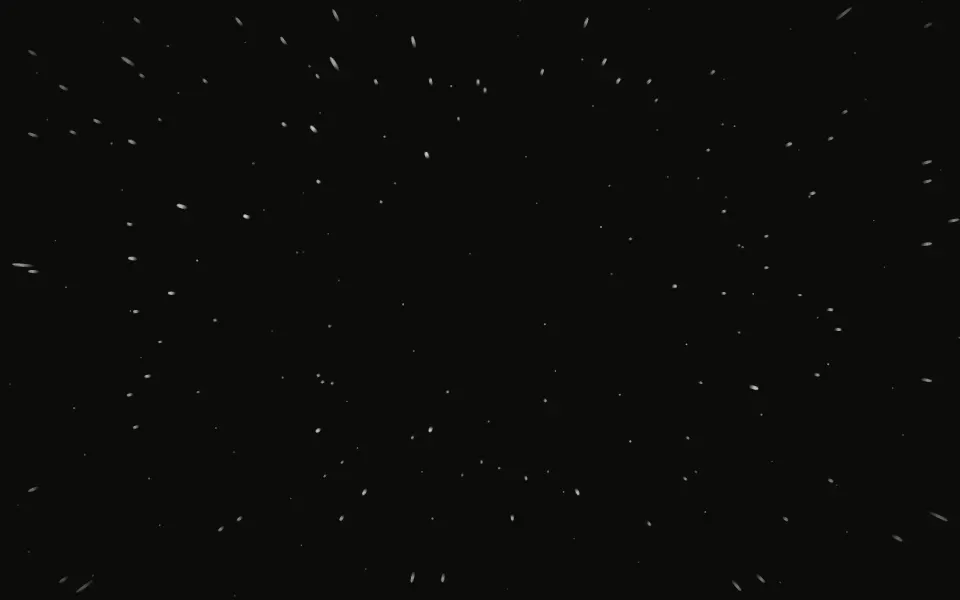
/>Each preset is a set of props, so copy one and keep tuning. Dusk is the default. Meadow turns them yellow-green over a green mist, Lanterns keeps a few large slow lights that barely move, Lagoon is a dense field of blue plankton with long streaks, Swarm packs the box with small fast ones, and Mono takes its color from your theme.
Examples
Hero
The fireflies are small and far apart, so the copy sits in the middle of the box, right over them. The headline and the line under it use the foreground color; the chip and the second button have a translucent ground of their own.
Lagoon
Three blues on a dark surface with a teal mist (hazeColor="#0e6a8a"): twice as many (density={2}), smaller (size={2.2}), on a slower rhythm (pulse={0.7}), and with the streak at its longest (trail={1}), so each one draws the bend of its path.
In a card
A few large lights that hardly move: size={6}, glow={1.7}, density={0.5}, wander={0.5}, a slow pulse={0.35} and no streak. fade="bottom" thins them out toward the lower edge, where the copy sits.
Customization
Every color is a CSS color, so a theme variable works and follows a theme switch: colors={["var(--chart-1)", "var(--chart-2)"]}. Each firefly takes one color of the list, and hazeColor tints the mist. size, glow and trail shape a firefly; density, wander and pulse set how many there are, how far they stray and how often they light.
The surface is the root's own background, bg-background by default. Give the root another (bg-slate-950, an image, a gradient) and the fireflies adapt: they add light to a dark surface and draw as pigment on a light one. fade masks an edge, opacity turns the whole effect down, and grain adds film grain.
<Fireflies
  class="min-h-[32rem] bg-slate-950"
  colors={["var(--chart-1)", "var(--chart-2)"]}
  density={1.5}
  fade="top"
  hazeColor="var(--chart-3)"
/>
Performance
It's one WebGL2 canvas and one fragment shader. The box is cut into cells at three scales, seven cells in ten hold one firefly, and a pixel checks the nine cells around it in each scale: 27 fireflies at most, nearly all of them dropped by a distance test before their path is worked out. The mist is three octaves of simplex noise. The cost doesn't grow with density. It draws only while it's on screen and the tab is visible, shares one frame loop with every other background on the page, and lowers its own resolution if frames run long. quality sets the render scale yourself, and paused holds the frame.
Accessibility
The fireflies are decoration: they're hidden from assistive tech and let every click through to your content. With reduced motion it draws one still frame and ignores the pointer. Nothing flashes: at pulse={1} a firefly lights once every 3 to 7 seconds, takes 0.4 to 0.8 seconds to come on and 1.3 to 2.9 seconds to fade, and travels about 10 pixels a second.
Put copy over it in the foreground color (text-foreground). Measured on the default look, foreground text keeps at least 5:1 on every pixel of a light surface and 14:1 on 99% of them. On a dark surface 99% of the pixels stay above 6.7:1 and no 24-pixel block averages below 5:1; the weak spots are the white-hot dots and the inside of the nearest halos, 0.4% of the pixels. Lower glow or intensity if body copy sits on many of them.
FAQ
How do I change the colors?
Pass one to eight CSS colors to colors. Each firefly takes one of them, so the list is a mix, not a gradient. hazeColor is the mist along the bottom. Hex, oklch() and theme variables such as var(--primary) all work, and a variable follows your theme when it changes. Yellow-green on a green mist reads as a meadow, cyan on teal as glowing plankton.
Does it work on a light page?
Yes, with no prop to set. The scene reads the color behind it. On a dark surface a firefly is light: a white-hot dot in a colored halo. Light can't show on white, so on a light surface the same firefly is a dot of pigment in a deeper tone of its color, with a pale tinted halo, and the mist is a faint tint along the bottom. Set the surface with a class on the component, such as bg-slate-950.
How do I show more or fewer fireflies?
density runs from 0.3 to 3. At 1 there are about 130 in a 1280 by 720 box, and about half of them are lit at any moment; the rest keep a faint ember. pulse sets how often each one lights, and at 0 they all stay lit. size is the radius of the nearest ones' dot in pixels, and glow the strength and width of the halo.
Can I slow them down or make them hover in place?
wander sets how far each firefly strays from its spot: 0 holds it in place, 2 lets it roam across its whole patch. speed scales all the motion, the blinking included, and trail is the streak of light behind a moving one, from none at 0 to a long curved one at 1.
How do I put it behind the whole page?
Render it empty with className="fixed inset-0 -z-10". It still answers the pointer there, since it listens on the window. To put it behind one section, wrap that section's content in it and give it a height, such as min-h-svh. The fireflies are sized in pixels, so a full page shows more of them, not larger ones.
Will it slow my page down?
It's a light shader: at most 27 fireflies checked a pixel, most of them rejected by one distance test, plus three octaves of noise for the mist, and nothing at all while it's off screen or the tab is hidden. If a device can't keep up, it renders fewer pixels by itself. The dots are small, so keep quality at 0.75 or above.
Does it work with Next.js and server components?
Yes. Import it into a server component and it renders its box and your content on the server; the canvas starts in the browser and fades in over the surface. It needs WebGL2, which every current browser has. Without it the box keeps its background, or the fallback you pass.
API Reference
Fireflies
data-slot="fireflies"
colors?string[]
One to eight CSS colors; each firefly takes one of them. Theme
variables such as var(--primary) follow your theme.
- Default
["#ffc24d", "#ffb347", "#ff9f4a"]
density?number
How many fireflies there are, from 0.3 to 3: 1 puts about 130 in a 1280 by 720 box, with about half of them lit at any moment.
- Default
1
fade?"none" | "radial" | "top" | "bottom" | "left" | "right"
Which edges fade out to the surface: radial keeps the middle, the
others name the side that fades.
- Type
"none" | "radial" | "top" | "bottom" | "left" | "right"- Default
"none"
fallback?string
What shows until the first frame and in browsers without WebGL2: a CSS
background value that looks like the scene.
glow?number
How strong and how wide the halo around each firefly is, from 0 (a bare dot) to 2.
- Default
1
grain?number
Film grain over the scene, from 0 to 1.
- Default
0
haze?number
How thick the mist along the bottom is, from 0 to 1.
- Default
0.5
hazeColor?string
The color of the mist, as any CSS color.
- Default
"#6b5bd6"
intensity?number
How bright the fireflies are, from 0 to 2.
- Default
1
interactive?boolean
Whether the scene follows the pointer and answers a press. Touch never moves it, so scrolling a page on a phone isn't disturbed.
- Default
true
opacity?number
How strongly the scene shows over the surface, from 0 to 1.
- Default
1
paused?boolean
Holds the current frame.
- Default
false
pulse?number
How often each firefly lights up, from 0 (they all stay lit) to 2: at 1 it's once every 3 to 7 seconds.
- Default
1
quality?number
Render scale, from 0.25 to 1, of the screen's pixels (capped at 2×). Lower is cheaper and softer.
- Default
1
size?number
The radius of the nearest fireflies' dot, in pixels, from 1.5 to 6. The ones further back are smaller.
- Default
3
speed?number
Animation speed: 1 is normal, 0 holds the frame.
- Default
1
time?number
A fixed moment, in seconds: draws it and doesn't animate.
trail?number
How long the streak of light behind a moving firefly is, from 0 (a dot) to 1.
- Default
0.5
wander?number
How far each firefly strays from its spot, from 0 (it hovers in place) to 2.
- Default
1