shadcn.io is an independent project built on shadcn/ui
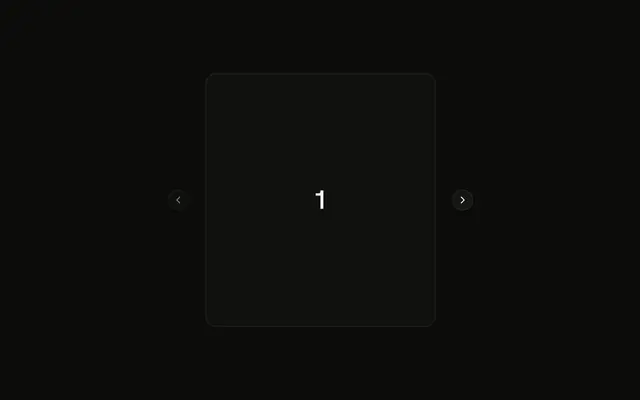
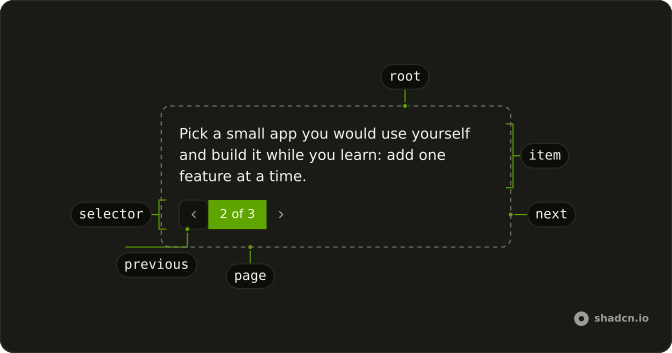
Message Branch keeps every version of one message and shows one at a time, with arrows and a "2 of 3" count to flip between them. Reach for it when a reply is regenerated or a prompt edited and the earlier version shouldn't vanish.
Each version wraps a whole Message, so it keeps its own layout and actions. To take the conversation back to an earlier turn instead, dropping what came after, use a Checkpoint.
Installation
Anatomy
Usage
<script setup lang="ts">
import { Message, MessageContent } from "@/components/ui/message";
import {
  MessageBranch, MessageBranchContent, MessageBranchItem,
  MessageBranchNext, MessageBranchPage, MessageBranchPrevious,
  MessageBranchSelector,
} from "@/components/ui/message-branch";
</script>
const versions = [
  { id: "docs", text: "Start with the tutorial at react.dev." },
  { id: "project", text: "Build a small app you'd use yourself." },
];

const Answer = () => (
  <MessageBranch>
    <MessageBranchContent>
      {versions.map((version) => (
        <MessageBranchItem key={version.id}>
          <Message>
            <MessageContent>{version.text}</MessageContent>
          </Message>
        </MessageBranchItem>
      ))}
    </MessageBranchContent>
    <MessageBranchSelector from="assistant">
      <MessageBranchPrevious />
      <MessageBranchPage />
      <MessageBranchNext />
    </MessageBranchSelector>
  </MessageBranch>
);Every version goes in its own MessageBranchItem, which is how the branch counts it. The selector can sit anywhere inside MessageBranch, under the versions as here or in a message's footer.
Accessibility
The selector is a group named Versions, with two buttons named Previous version and Next version, and the "2 of 3" between them is a polite live region, so a screen reader reads the new count after each press. Versions that aren't showing carry the hidden attribute, so assistive technology skips them as well. Those names are in English. Pass your own aria-label to the selector and the buttons to translate them, and give MessageBranchPage a label function, which gets the version's number and the count and returns the text, such as "2 de 3".
- Tab
- Moves focus to the Previous version button, then the Next version button.
- Shift+Tab
- Moves focus back the other way.
- Enter
- On Previous version or Next version, shows the version before or after and updates the count.
- Space
- On Previous version or Next version, shows the version before or after and updates the count.
Demos
Regenerate
A reply about wrapping card layouts, with the selector beside Copy and Regenerate in its footer. It starts with one version, so no selector shows until the first Regenerate adds a second and switches to it through branch and @branch-change. Wrap the whole Message in MessageBranch like this when the selector belongs among the reply's own actions. Copy writes the version on screen to the clipboard.
Edited prompts
Two versions of a prompt for a launch email's subject line, each MessageBranchItem holding the prompt and the reply it got. defaultBranch opens on the later, shorter edit, and the selector sits in the prompt's MessageFooter, under the bubble on the end side. Use pairs like this when editing a prompt reruns the conversation from that point.
AI SDK
regenerate drops the reply, and anything after it, from the chat's messages before it asks the model for a new one, so the old reply is gone unless you keep it. Save it before you call regenerate, under the id of the prompt it answers.
import type { UIMessage } from "ai";
import { Chat } from "@ai-sdk/vue";
import { ref } from "vue";

const chat = new Chat({});
const replaced = ref<Record<string, UIMessage[]>>({});

function retry(prompt: UIMessage, reply: UIMessage) {
  replaced.value[prompt.id] = [...(replaced.value[prompt.id] ?? []), reply];
  chat.regenerate({ messageId: reply.id });
}
Migrating from AI SDK Elements
AI SDK Elements is for React. In Vue, install Message Branch and wrap each version in a MessageBranchItem, as the demos do.
FAQ
How do I show the versions of a regenerated reply in Vue?
Wrap them in MessageBranch: each version in a MessageBranchItem inside MessageBranchContent, and a MessageBranchSelector holding MessageBranchPrevious, MessageBranchPage and MessageBranchNext. Only the current version shows. The others stay in the page with the hidden attribute, so switching back is instant and each keeps its state.
The Usage snippet is the smallest version of this, and the Regenerate demo adds a version each time the reader asks for one.
Why does each Message Branch version need a MessageBranchItem?
Each item registers itself with the branch when it mounts, and the selector counts what registered, in the order the items sit in the page. That's why a version can come from a list, a fragment or a component of your own, and needn't be a direct child of MessageBranchContent.
Anything inside MessageBranchContent without an item around it isn't counted or hidden, so it shows under every version.
Why doesn't the Message Branch selector show?
It renders only once there are two versions or more. A reply that was never regenerated has one, so there are no arrows and no "1 of 1", and the message looks like any other. The first new version brings the selector in, as the Regenerate demo shows.
If there are two versions and still no selector, check that each one sits in its own MessageBranchItem. A selector placed outside MessageBranch throws an error rather than hiding.
How do I switch to the newest version after a regenerate?
Control it. Keep the index in state, pass it as branch, update it from @branch-change, and set it to the new version's index when you add one, which is the length of your list before the new version. The Regenerate demo does exactly this.
Left uncontrolled, the branch stays on the version the reader was looking at.
Can Message Branch stop at the first and last version instead of wrapping?
As shipped, Next goes from the last version round to the first and Previous from the first to the last, as in AI SDK Elements, and both stay enabled while there are two versions or more. To stop at the ends, control branch and set disabled on MessageBranchPrevious while the first version shows and on MessageBranchNext while the last one does. Your value wins over the component's own.
Can people switch Message Branch versions with a keyboard and a screen reader?
Yes. Previous and Next are ordinary buttons, named Previous version and Next version, in a group named Versions, so Tab reaches them and Enter or Space presses them. The "2 of 3" between them is a polite live region, read after each press.
The versions that aren't showing have the hidden attribute, so a screen reader skips them too. The Accessibility section says how to translate the names.
Which Message Branch version shows before the page hydrates?
The first one. Versions register in the browser, so the server's HTML shows the first version and no selector. When defaultBranch points at another version, that one takes the first's place as the page hydrates, so on a slow connection the first version shows for a moment.
CSS hides the other versions in that HTML wherever the items sit inside MessageBranchContent, each in a wrapper element of its own included, so the thread never loads with every version stacked.
How do I keep the earlier versions of an edited prompt?
Make each version a pair, the prompt as it was and the reply it got, both inside one MessageBranchItem. Put the selector in the prompt's MessageFooter, which lines it up under the bubble on the end side, and set defaultBranch to the last index to open on the latest edit, as the Edited prompts demo does.
Each item then carries its own selector, and a hidden version hides its selector with it. With the AI SDK, save the old prompt and reply before you send the edit, the same way you save a regenerated reply.
API Reference
MessageBranch
branch?number
The version shown, from 0, when controlled. Two-way with v-model:branch.
defaultBranch?number
The version shown at first, from 0, when uncontrolled.
- Default
0
class?string
Merged with the part's classes.
@branch-change(branch: number) → void
Called with the version's index, from 0, when the reader moves to it.
- Parameters
branch– number- Returns
void
MessageBranchContent
<div> data-slot="message-branch-content"
class?string
Merged with the part's classes.
MessageBranchItem
<div> data-slot="message-branch-item"
class?string
Merged with the part's classes.
data-pending?string
Present when pending is true.
data-state?string
"active" when active is true, otherwise "inactive".
MessageBranchSelector
data-slot="message-branch-selector"
from?"assistant" | "system" | "user"
Whose message it is, as AI SDK Elements takes it: a user's selector sits at the end.
- Type
"assistant" | "system" | "user"
class?string
Merged with the part's classes.
data-from?string
Mirrors from.
MessageBranchPrevious
data-slot="message-branch-previous"
clickEffect?boolean
Apply a click effect to the button.
- Default
true
isLoading?boolean
Show a loading indicator.
- Default
false
asChild?boolean
Use the provided child element as the default rendered element, combining their props and behavior.
class?string
Merged with the part's classes.
MessageBranchNext
data-slot="message-branch-next"
clickEffect?boolean
Apply a click effect to the button.
- Default
true
isLoading?boolean
Show a loading indicator.
- Default
false
asChild?boolean
Use the provided child element as the default rendered element, combining their props and behavior.
class?string
Merged with the part's classes.
MessageBranchPage
<span> data-slot="message-branch-page"
label?(page: number, count: number) → VNode
The text, from the version shown (counting from 1) and how many there
are. Return your own to translate it. Ark default: (page, count) => ${page} of ${count}``.
- Type
(page: number, count: number) → VNode- Default
pageOf- Parameters
page– numbercount– number- Returns
React.ReactNode
class?string
Merged with the part's classes.