AVIF to data URI converter.
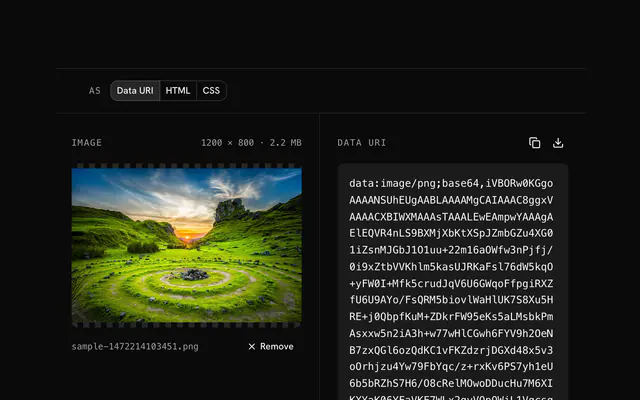
Drop an AVIF and get a data:image/avif;base64 URI, bare or wrapped in an <img> tag or a CSS url(). Encoded on your device only.
AVIF to data URI converter.
Need the UI around it? With Pro, your AI agent builds the form, the result card and the rest of the page from a prompt.
Get ProHow it works
3 steps, no account. It runs in your browser and nothing is uploaded.
Drop the AVIF
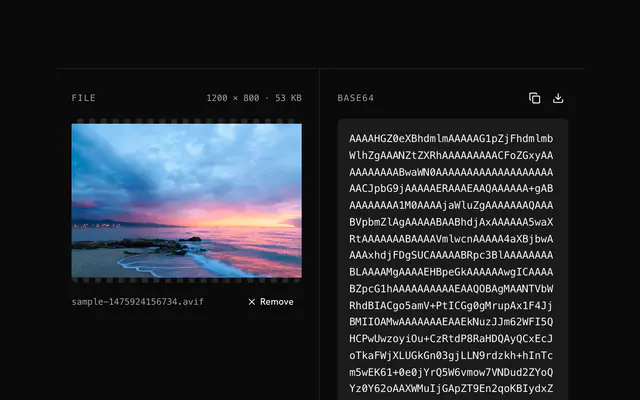
Drop the AVIF onto the pane or choose it; the preview shows it.
Choose the snippet
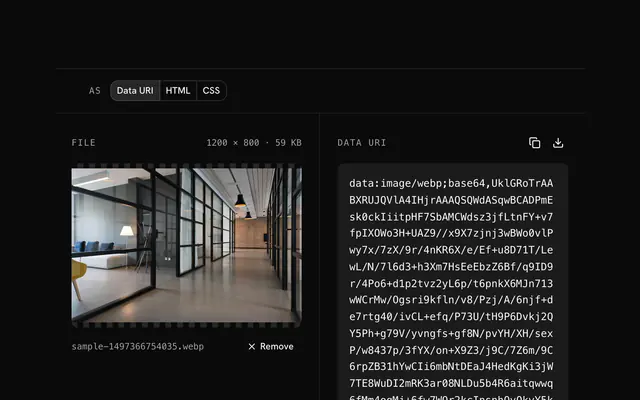
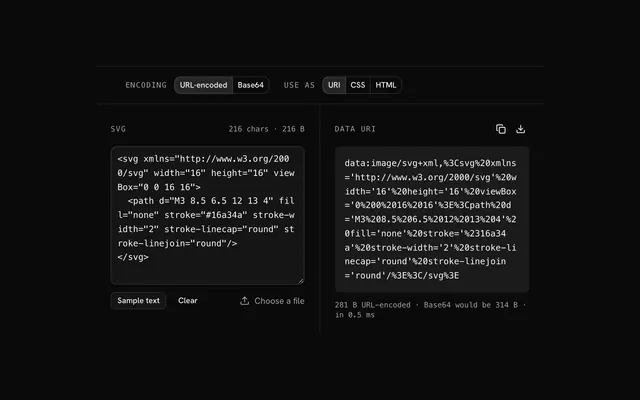
Pick the bare URI, an <img> tag or a CSS background line.
Copy or download
Copy the snippet to the clipboard or download it as a file.
Related tools
More AVIF tools. Every one free, in the browser.
Pricing
Build it with Pro
The tool is free. Pro adds 6,000+ blocks, premium templates and the MCP server, so your AI editor builds the product around it.
4.9/5 out of 5 · 150+ reviewsfrom 150+ founders and developers.
- Secure checkout via Stripe
- Code lives in your repo
- Keep what you've shipped if you cancel
- License terms
Questions and answers
Before you trust the result: what to know about the format, the limits, your data and the tools next to it.
A data URI puts the file inside the page: data:image/avif;base64, followed by the bytes. No request, no extra file, and the image is there when the HTML or CSS is. AVIF gives the smallest such strings of any format, roughly half a PNG's.
Not in old ones. Chrome and Edge since 2020, Firefox since 93 and Safari since 16.4 show AVIF; earlier browsers show a broken image. Use it where you know the browsers (internal tools, recent apps) or give a fallback.
Use the picture element: an AVIF source first, then WebP, then a PNG or JPG img. Each source can be a data URI, though that multiplies the page size; a fallback as a normal file is usually the better trade.
Small images used once: an icon, a placeholder, a hero's blurred preview. Past a few kilobytes a file with caching wins, and an inlined image can't be cached across pages.
Drop the AVIF and choose the snippet: the bare URI, an <img> tag with the file's name as alt text, or a CSS background-image line. Copy it or download it as a file.
Four characters for every three bytes, plus the data:image/avif;base64, prefix. The status line gives the exact count.
No. The file is decoded by your browser and every pixel is handled by JavaScript on your device. The page makes no request with your image, and you can load it, go offline and keep working.
No. The AVIF to data URI converter is free and opens without a sign-in, an account or an install.
Nothing. The AVIF to data URI converter holds your input in the page's memory, so closing or reloading the tab clears it, and it saves nothing in this browser.
Up to 20 MB per file, the limit the tool states under its drop area. A larger file is refused with a plain message instead of being decoded.
No, it takes one file at a time. If you drop or choose several, only the first is used; run the tool again for the next one.
No. The text is made from the file's own bytes, unchanged, so EXIF and every other metadata field stay inside it. Nothing is re-encoded or resized.
About a third longer: Base64 writes every three bytes as four characters. The status line shows the exact character count and the overhead for your file.
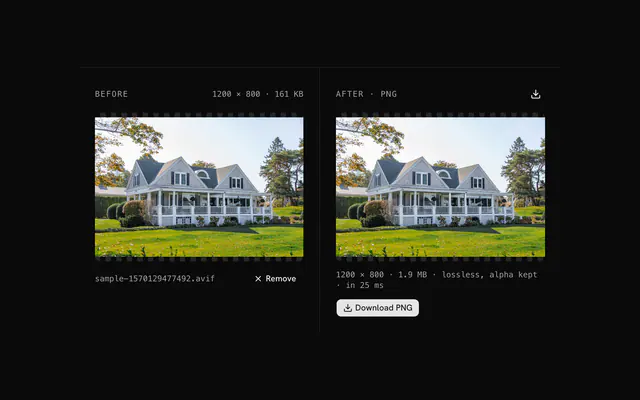
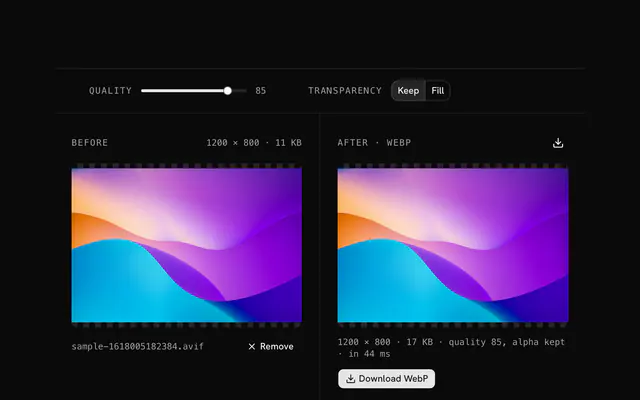
Closest to the AVIF to data URI converter: AVIF to Base64 encoder, AVIF to PNG converter, AVIF to WebP converter, WebP to data URI converter. Each opens on its own page, free and in the browser.
The AVIF to data URI converter is one of 37 in its group. The group's page, /tools/avif, lists them all.
The tool is free. Its interface is built from shadcn.io's own components (Button, Input, Slider and the rest of the registry under /ui), which come in React, Vue, Svelte and Solid. Pro adds the blocks and templates for the product around it.
4.9 out of 5 from 150+ developers


Build the product around it
Every block, template and icon, installed by your AI agent in your theme. The tools stay free.
Get Pro